When I build learning management systems for clients, security is never an afterthought. It’s one of the first conversations we have. A single breach can destroy years of hard work, erode student trust, and even lead to legal trouble.
If you’re developing your own LMS or choosing one for your online courses, understanding security isn’t optional — it’s essential. In this post, I’ll share why LMS security deserves your attention and exactly how to make your platform resilient.
I’ve spent years working with learning content management systems, helping businesses and educators launch secure e-learning platforms. The lessons come from both successful projects and a few close calls that taught me what not to ignore.
Why Security Is Non-Negotiable in LMS Development
Learning management systems handle sensitive information: student personal data, payment details, course progress, and sometimes proprietary training materials. This makes them attractive targets for attackers.
A compromised LMS doesn’t just leak data. It can lead to:
- Loss of user trust
- Regulatory fines (GDPR, CCPA, or local equivalents)
- Downtime that hurts course completion rates
- Reputation damage that’s hard to recover from
According to various industry reports, education platforms consistently rank among the top targets for cyberattacks. When students and businesses entrust you with their learning journey, security becomes part of your product quality.
Core Benefits of Strong LMS Security
Beyond avoiding disasters, solid security delivers real advantages:
Builds credibility — Students feel safer enrolling in your courses.
Improves retention — No one wants to log into a platform that feels risky.
Supports scalability — Secure architecture handles growth without constant firefighting.
Eases compliance — Makes it simpler to meet data protection standards.
I’ve seen clients win bigger corporate contracts simply because their LMS had stronger security certifications and practices than competitors.
How Poor Security Impacts Your Business and Students
Let me share a real example. A few years back, I consulted for an education startup that launched an LMS quickly to beat competitors to market. They skipped proper authentication hardening and regular security audits. Within months, they faced a credential-stuffing attack that exposed thousands of student accounts.
The aftermath? Months of recovery work, lost users, and a complete rebuild of parts of the system. The delay cost them significant revenue.
Compare that to platforms like Thinkific or LearnWorlds, which invest heavily in security features. Their users report higher trust levels, and these platforms continue to grow steadily.
Step-by-Step: How to Ensure Security in Your LMS Development
Here’s the practical framework I use when developing learning management systems:
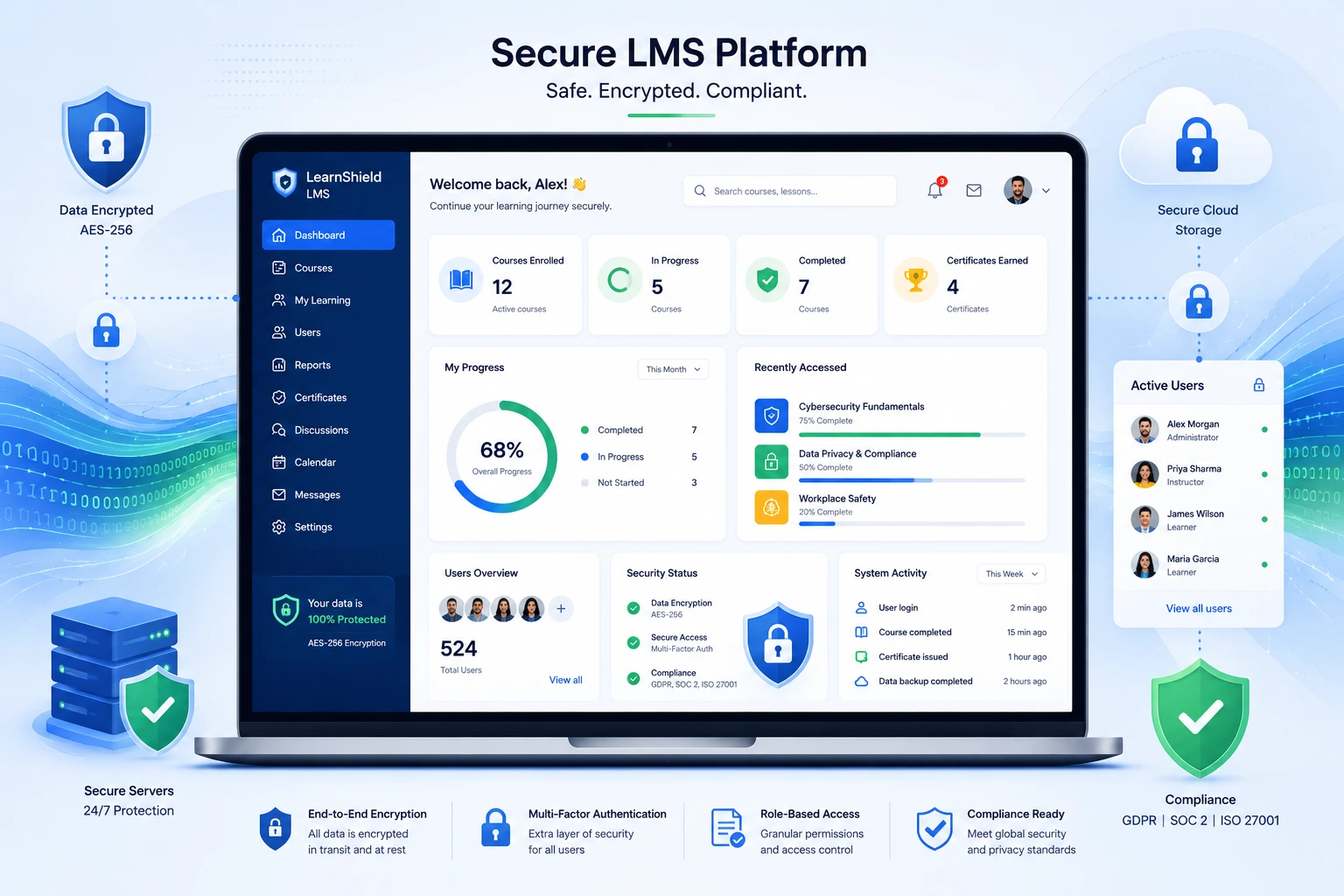
- Start with Secure Authentication Implement strong password policies, multi-factor authentication (MFA), and consider passwordless options like magic links or social login with proper verification.
- Protect Data at Rest and in Transit Always use HTTPS. Encrypt sensitive database fields. Use modern encryption standards for stored data.
- Apply Role-Based Access Control (RBAC) Not every user needs admin access. Define clear roles for students, instructors, and administrators.
- Keep Everything Updated Regularly update the core LMS framework, plugins, and dependencies. Outdated components are the easiest entry points.
- Conduct Regular Security Testing Run vulnerability scans, penetration testing, and code reviews. I recommend both automated tools and manual audits.
- Implement Logging and Monitoring Track suspicious activities without invading privacy. Set up alerts for unusual login attempts or data access patterns.
- Plan for Backups and Recovery Automate secure, encrypted backups. Test restoration processes periodically.
Following these steps early in development saves massive headaches later.
Common LMS Security Mistakes and How to Avoid Them
From my experience, these are the pitfalls I see most often:
- Relying solely on hosting provider security — Your cloud host helps, but application-level security is your responsibility.
- Hardcoding credentials or API keys — This is surprisingly common. Use environment variables and secret management tools.
- Ignoring plugin and extension risks — In WordPress-based LMS setups, third-party plugins can introduce vulnerabilities. Vet them carefully.
- Skipping user input validation — This opens doors to SQL injection and XSS attacks.
- Neglecting mobile security — Many students access courses on phones. Ensure your responsive design doesn’t create new weaknesses.
If you’re using platforms like WordPress, sticking close to core best practices from WordPress.org documentation helps tremendously.
For custom development, I often recommend frameworks with strong security defaults and regular audits.
FAQ: LMS Security Questions Answered
What is the biggest security risk in learning management systems?
Weak authentication and outdated software top the list. Many breaches happen through compromised user accounts or unpatched vulnerabilities.
Do I need custom development for a secure LMS?
Not necessarily. Established platforms like Thinkific or LearnWorlds offer robust security. However, if you need highly specific features, custom LMS development with security built-in is worth it.
How much should I budget for LMS security?
Plan for 15-25% of your development budget on security practices, testing, and ongoing monitoring. It’s cheaper than dealing with a breach.
Can a small team handle secure LMS development?
Yes, if you follow established best practices and use secure tools from the start. Focus on fundamentals before adding complex features.
How often should I update my LMS security?
Continuously. Schedule monthly reviews and immediate updates when critical vulnerabilities are announced.
Building Secure Learning Management Systems That Last
Security isn’t a feature you add at the end — it’s the foundation of any reliable learning management system. When you prioritize it, you protect your users, your business, and your reputation.
Whether you’re developing your own LMS from scratch, extending an existing platform, or choosing the right solution for your needs, make security a core requirement.
If you’re planning an LMS project and want to discuss secure development approaches, I’d love to help. Visit my portfolio or explore our services at DigitalWind IT to see how we build robust learning content management systems.