Picking the right LMS developer can make the difference between a training platform that transforms your company and one that becomes an expensive headache. I’ve seen both outcomes while helping businesses build custom training solutions over the years.
A good custom LMS aligns perfectly with your processes, but only if the developer truly understands both the technology and your business reality. In this ultimate guide, I’ll walk you through exactly how to choose an LMS developer who delivers real value.
Whether you need a full custom learning management system or heavy customization of an existing platform, this process will help you avoid costly mistakes.
Why Choosing the Right LMS Developer Matters
Most businesses underestimate how complex a good learning management system actually is. It’s not just uploading courses. You need user management, progress tracking, integrations, mobile access, reporting, compliance tools, and content authoring that non-technical people can actually use.
The wrong developer delivers something that looks nice in demos but fails in daily use. The right one builds a system that employees love and that grows with your business.
From my experience, companies that invest time upfront in selecting the right partner see significantly better adoption rates and faster ROI.
Freelancer vs Agency vs In-House Developer: Which Is Best?
Freelancers: Great for small, straightforward projects or when budget is tight. They can be very responsive but often lack team support for complex integrations or long-term maintenance.
Development Agencies: Usually the sweet spot for most mid-sized businesses. They bring structured processes, multiple specialists (UI/UX, backend, DevOps), and project management. Look for agencies with actual LMS or eLearning experience.
In-House Team: Only makes sense if you have ongoing large-scale needs and the budget to hire full-time developers, designers, and maintainers.
Comparison Insight: For most corporate training needs, a specialized agency beats a general freelancer or building everything in-house from scratch. Tools like Moodle or TalentLMS can be customized by experienced developers, while full custom solutions need deeper expertise.
Key Qualities to Look for in an LMS Developer
Here’s what actually matters:
- Proven LMS Experience — Ask for specific examples of past learning management systems they’ve built, not just general web apps.
- Strong Technical Stack — Modern frameworks (React, Node.js/Laravel, etc.), good security practices, and scalability knowledge.
- Understanding of Learning Design — The best developers collaborate well with instructional designers or understand adult learning principles.
- Integration Expertise — Ability to connect with your HRIS, CRM, authentication systems, and other tools.
- Post-Launch Support — Clear maintenance plans and response times for issues.
I always recommend checking their portfolio for clean, intuitive interfaces that don’t feel like typical corporate software.
Step-by-Step Process to Choose Your LMS Developer
Follow this practical approach:
- Define Your Requirements Clearly — Document must-have features, user numbers, integrations, compliance needs, and success metrics.
- Create a Shortlist — Search for “custom LMS developer” or “LMS development company” and review portfolios and case studies.
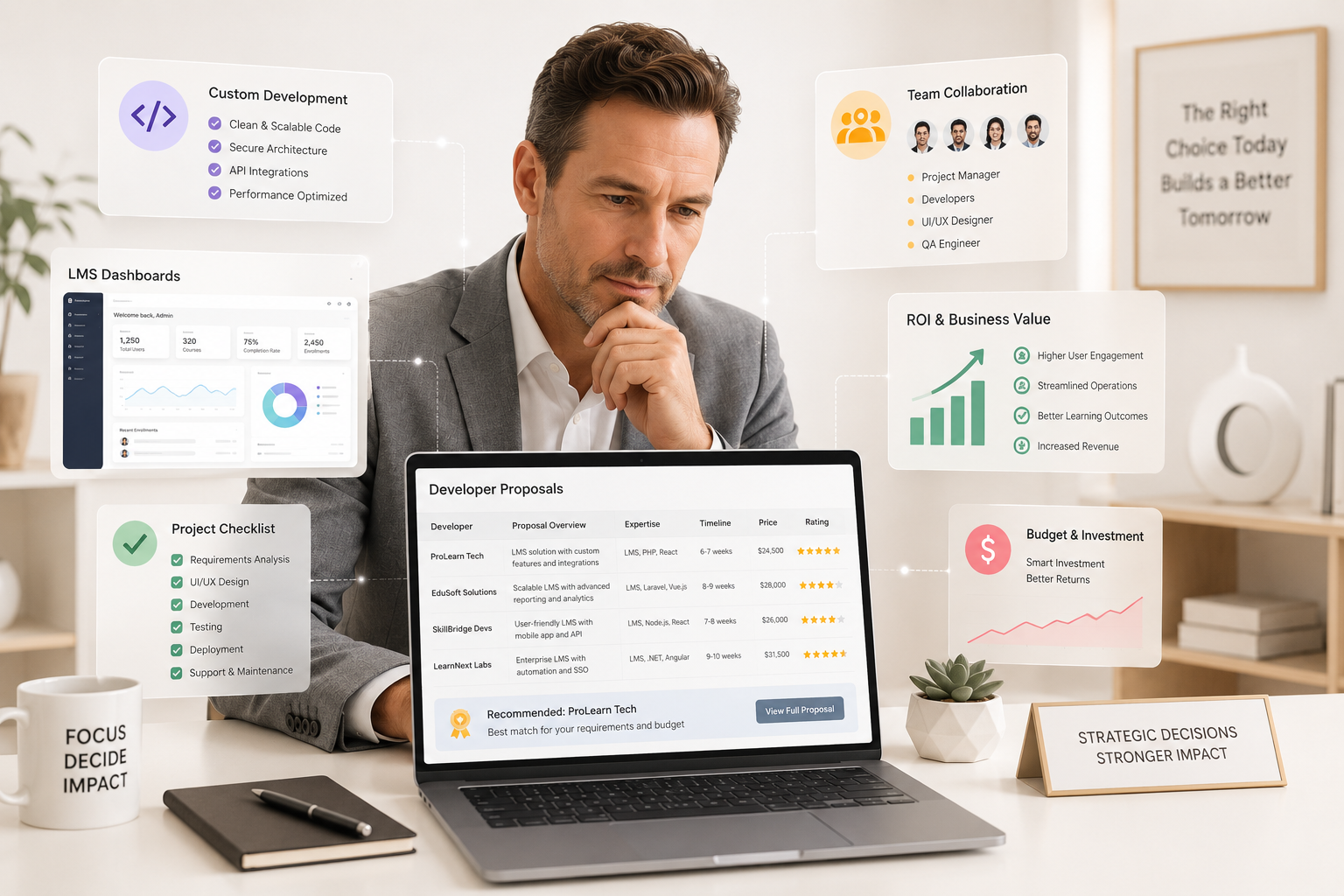
- Evaluate Proposals — Compare not just price but approach, timeline, and how well they understood your needs.
- Check References — Speak directly with past clients about communication, delivery, and long-term satisfaction.
- Review Technical Approach — Discuss architecture, data security, mobile strategy, and future scalability.
- Start with a Small Pilot — Consider a paid discovery phase or MVP before committing to the full project.
- Negotiate Clear Contracts — Include milestones, payment terms, ownership of code, and maintenance SLAs.
This structured method removes most of the guesswork.
Red Flags That Should Make You Walk Away
Watch out for these warning signs:
- Vague answers about past LMS projects
- Extremely low price quotes that seem too good to be true
- No interest in understanding your business goals
- Poor communication during the proposal stage
- Reluctance to provide references or NDAs
- Pushing a one-size-fits-all solution without customization
I’ve seen businesses regret choosing the cheapest option when the delivered system needed constant fixes.
Real-World Example
One of my clients, a growing fintech company, initially hired a general web development agency. The project dragged on and the final product had poor mobile performance. After switching to a developer team with actual eLearning experience, they launched a much better system in less time and with higher user satisfaction. The second team understood SCORM, xAPI, and compliance requirements that the first one had to learn on the job.
Questions You Should Ask Every LMS Developer
- What learning management systems have you built in the last two years?
- How do you handle content updates and non-technical admins?
- What is your approach to mobile and offline access?
- How do you ensure data security and compliance?
- What does ongoing maintenance and support look like?
- Can you integrate with our existing tools (mention specific ones)?
Their answers will quickly separate serious professionals from the rest.
Common Mistakes Businesses Make
- Focusing only on cost instead of total value and long-term ownership
- Not involving end users and training managers in the selection process
- Underestimating the importance of change management and training
- Choosing developers without relevant LMS portfolio pieces
- Skipping proper discovery and requirements phase
If you need help navigating this, feel free to explore options at Digital Wind IT or check my experience at Shihab Morshed.
FAQ: Choosing an LMS Developer
How much does it cost to hire an LMS developer?
Custom projects typically range from $15,000 for simpler systems to $80,000+ for complex enterprise solutions. Ongoing maintenance is usually 15-20% per year.
Should I choose a developer who only works with specific platforms?
It depends. Specialists in Moodle or Docebo can be great for customization, while full custom developers offer more flexibility.
How long does a custom LMS project take?
Simple versions can launch in 2-4 months. More comprehensive learning content management systems usually take 4-8 months.
Is it better to customize an existing platform or build from scratch?
Most businesses get better results and value by heavily customizing strong foundations rather than building everything from zero.
What technical skills should a good LMS developer have?
Look for experience with modern web technologies, database design, API integrations, cloud hosting, and preferably some background in education technology.
Final Thoughts: Build With the Right Partner
Choosing the right LMS developer is one of the most important decisions in your training transformation journey. Take your time, ask tough questions, and prioritize experience and communication over the lowest price.
The best custom learning management system feels like it was built by your own team — because the developer took time to truly understand your needs.Ready to move forward? Visit Digital Wind IT for custom development expertise or reach out through my site at Shihab Morshed. The right partner will help you create a learning management system that delivers results for years to come.