Launching a new learning management system is a big investment. But how do you know if it’s actually working? Many companies implement an LMS, celebrate the launch, and then rarely check its real impact.
From my experience helping businesses deploy and optimize training platforms, measuring success properly is what separates good implementations from truly transformative ones. Without clear metrics, you can’t improve the system or prove its value to leadership.
In this guide, I’ll show you the most important ways to measure LMS success and turn your training platform into a strategic business asset.
Why Measuring LMS Success Matters
Tracking the right metrics helps you:
- Justify the investment to stakeholders
- Identify areas that need improvement
- Demonstrate clear ROI
- Make data-driven decisions about future training initiatives
A successful LMS should improve learning outcomes, boost employee performance, and deliver measurable business results — not just sit there collecting course completions.
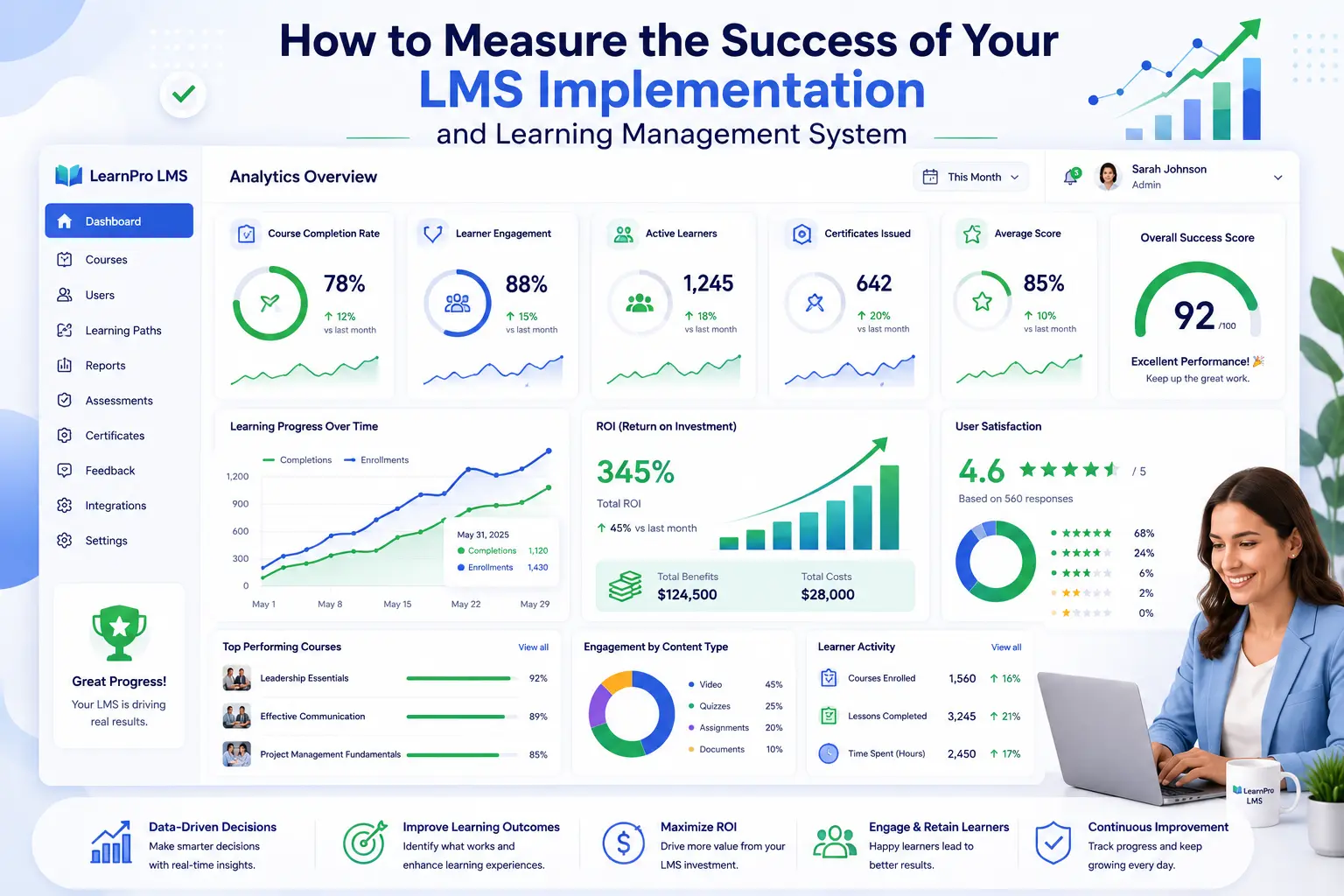
Key Metrics to Measure LMS Success
Focus on these core categories:
1. Usage and Adoption Metrics
- Login frequency and active users
- Course enrollment vs completion rates
- Time spent in the system
2. Learning Effectiveness
- Average completion rates (target: 70%+)
- Knowledge retention (pre/post assessments)
- Skill application on the job
3. Engagement Indicators
- Average session duration
- Interaction with content (quizzes, discussions, gamification)
- Feedback and satisfaction scores (NPS or surveys)
4. Business Impact
- Reduction in onboarding time
- Improvement in key performance indicators (sales, safety incidents, customer satisfaction)
- ROI calculation (cost saved vs training investment)
5. System Performance
- Platform uptime and speed
- Mobile usage percentage
- Support ticket volume
Comparison Insight: Generic platforms like Thinkific or Kajabi provide basic analytics. LearnWorlds offers stronger engagement tracking. However, a custom LMS gives you deeper, more relevant metrics tailored to your specific business goals.
Real-World Example
A mid-sized logistics company I worked with launched a new LMS but saw only 52% completion rates after three months. By tracking detailed metrics and making adjustments — simplifying navigation, adding gamification, and improving mobile access — they raised completion to 89% and reduced new driver onboarding time by 37%. The data clearly showed the changes were working and helped secure more budget for advanced features.
Step-by-Step: How to Measure Your LMS Success
Follow this practical framework:
- Set Clear Objectives — Define what success looks like before or right after launch (e.g., 80% completion, 30% faster onboarding).
- Choose Relevant KPIs — Select 6–8 metrics that align with your goals.
- Set Up Tracking — Ensure your learning management system has proper analytics or integrate with tools like Google Analytics.
- Establish a Baseline — Measure current training performance before full rollout.
- Review Regularly — Check monthly for usage, quarterly for effectiveness, and annually for ROI.
- Gather Qualitative Feedback — Combine numbers with employee and manager surveys.
- Act on Insights — Use data to refine content, design, and features continuously.
This cycle turns your LMS into a continuously improving system.
Common Mistakes in Measuring LMS Success
- Focusing only on completion rates while ignoring actual learning
- Not setting clear goals before implementation
- Relying solely on system-generated reports without context
- Failing to link training data with business outcomes
- Reviewing metrics too infrequently
An experienced LMS developer can help you build better tracking and reporting from the start. Explore custom solutions at Digital Wind IT.
FAQ: Measuring LMS Implementation Success
What is the most important LMS metric?
It depends on your goals, but completion rate combined with business impact (like performance improvement) usually matters most.
How soon should I start measuring success?
Begin tracking from day one, but review meaningful results after 30, 90, and 180 days.
Can I measure ROI for a custom LMS?
Yes. Calculate costs (development + maintenance) against benefits (time saved, reduced errors, higher productivity).
What completion rate indicates a successful LMS?
70%+ is strong for most internal training programs. External courses may vary.
How do I know if my LMS needs improvement?
If adoption is low, feedback is negative, or you can’t clearly link it to business results, it’s time to optimize.
Turn Your LMS into a Proven Success
Measuring the success of your learning management system isn’t just about collecting data — it’s about continuously improving learning experiences and delivering real business value.
A data-driven approach helps you justify investment, spot problems early, and build a training culture that actually works. The best LMS implementations are never “set and forget.”
If your current system isn’t delivering clear results or you’re planning a new implementation, start measuring properly today. Visit Digital Wind IT for custom development and analytics expertise or connect with me at Shihab Morshed.The most successful companies don’t just implement an LMS — they measure, learn, and improve it over time.