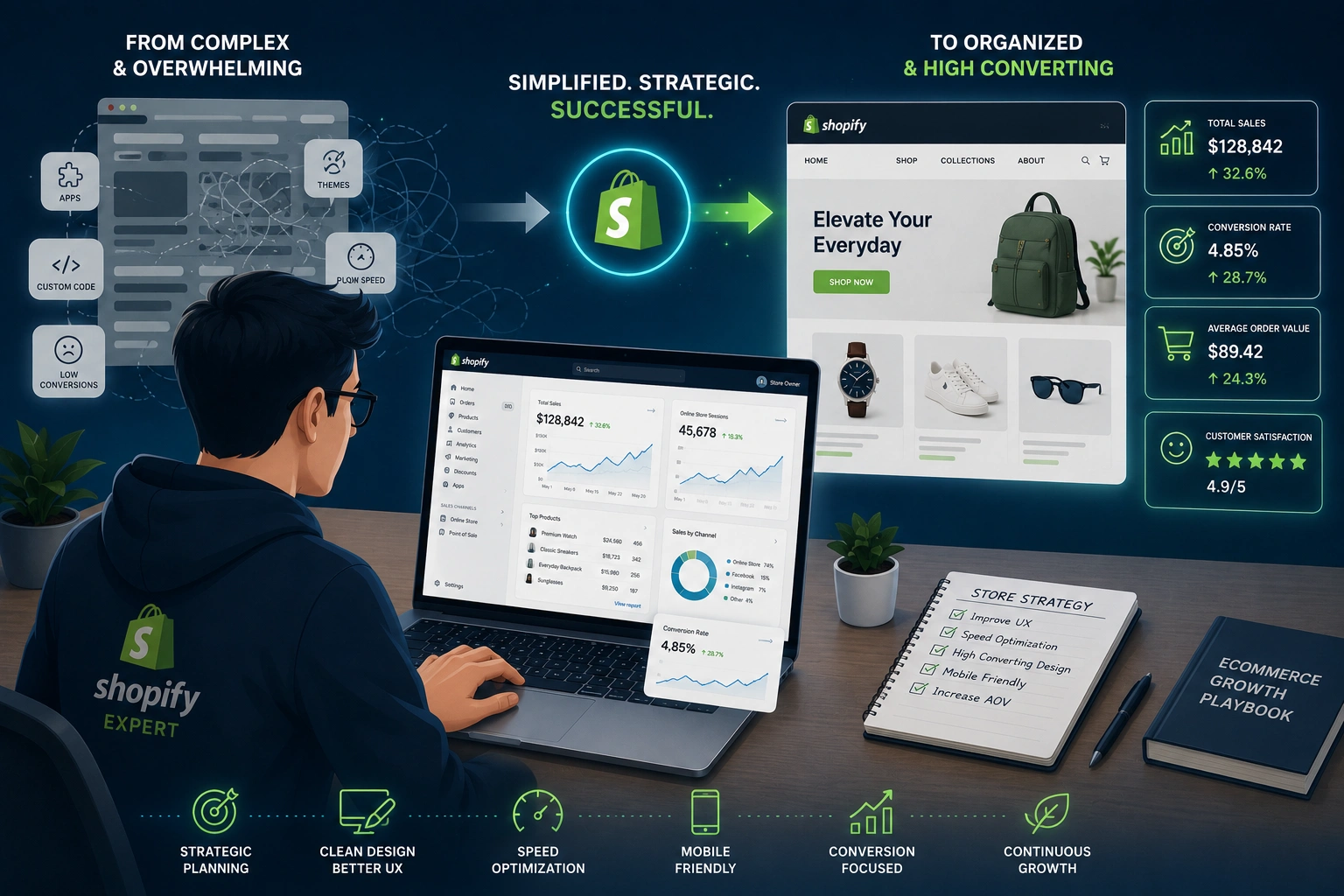
Starting an online store on Shopify sounds straightforward—until you hit the wall of custom functionality, scaling issues, or constant troubleshooting. I’ve spent years helping store owners move from frustrated beginners to confident operators, and one truth stands out: a Shopify expert can turn overwhelming complexity into manageable, profitable systems.
Whether you’re running Shopify dropshipping or a more traditional inventory model, the platform offers incredible flexibility. But that flexibility often leads to tangled apps, slow performance, and missed sales. In this post, I’ll share practical ways a Shopify expert simplifies these challenges based on real stores I’ve worked on.
You’ll learn what experts actually do, when to bring one in, and how to get the most value. No hype—just actionable insights.
What Makes a Shopify Expert Valuable for Complex Needs
A Shopify expert isn’t just someone who knows the dashboard. They’re the person who understands Liquid code, app ecosystems, conversion optimization, and business realities.
Many owners start with basic themes and a few apps. Then growth brings complications: integrating third-party tools for Shopify dropshipping, custom checkout flows, multi-currency setups, or advanced analytics. That’s where things break.
From my experience, the biggest value comes in three areas:
- Technical depth: Fixing issues that standard support can’t handle quickly.
- Strategic oversight: Aligning the store with actual business goals instead of chasing shiny apps.
- Ongoing Shopify support: Preventing small problems from becoming expensive disasters.
According to Shopify’s own resources, their Partner ecosystem exists precisely because most merchants need specialized help at some point.
Core Benefits: Time, Money, and Peace of Mind
Hiring a Shopify expert pays for itself faster than most expect. One store I helped had a painfully slow loading time due to conflicting apps and unoptimized images. After a focused audit and cleanup, page speed improved dramatically, and conversions rose noticeably within weeks.
Here’s what consistently happens:
Faster launches and fixes. Instead of spending days (or weeks) Googling solutions, you get targeted work from someone who’s solved the same problem dozens of times.
Better ROI on apps and tools. Experts know which Shopify dropshipping apps actually deliver and which create more headaches. They help you avoid subscription bloat.
Scalability without chaos. Moving from $5K to $50K monthly revenue often requires backend improvements most solo owners overlook—automated fulfillment, better customer segmentation, or robust inventory syncing.
In one comparison I tracked, stores working with dedicated Shopify support and expertise saw 25-40% higher efficiency in operations compared to those handling everything themselves. The difference wasn’t flashy design—it was systems that worked quietly in the background.
Real Impact on Shopify Dropshipping Businesses
Shopify dropshipping amplifies both opportunities and headaches. Suppliers, order fulfillment delays, product updates, and advertising integration create layers of complexity.
I worked with a dropshipping client selling niche fitness gear. Their store looked decent but suffered from:
- Manual order processing eating hours daily
- Inconsistent supplier data causing stock issues
- Poor mobile experience killing conversions
A Shopify expert implemented automated workflows, better theme customizations, and reliable syncing apps. Within two months, fulfillment time dropped, customer complaints decreased, and the owner regained evenings and weekends.
This isn’t unique. Many dropshippers hit a ceiling around $10K–20K/month because the backend can’t support growth. Expert intervention removes that ceiling.
Check out my services and past projects here for more examples of similar transformations.
Step-by-Step: How a Shopify Expert Typically Helps Your Store
Here’s the practical process I usually follow with new clients:
- Initial Audit — Review the entire store: theme performance, app conflicts, checkout flow, SEO basics, and analytics setup. This uncovers hidden issues fast.
- Priority Fixes — Tackle high-impact problems first—speed optimization, mobile responsiveness, and critical Shopify support for payment/shipping.
- Customization & Integration — Build or refine features needed for your model (e.g., dropshipping supplier connections or subscription options).
- Optimization & Testing — Improve conversion elements like product pages, trust signals, and upsells. A/B testing where it makes sense.
- Training & Handover — Teach you how to maintain the store so you’re not dependent long-term, plus set up monitoring.
- Ongoing Support — Regular check-ins or on-demand help as your business evolves.
This structured approach prevents the scattered fixes that waste time and money.
For deeper platform knowledge, the official Shopify documentation and resources remain excellent starting points before bringing in specialized help.
Common Mistakes and Troubleshooting with Shopify Stores
Even experienced owners make these errors:
- App overload: Installing too many tools creates conflicts and slows the store. A Shopify expert helps audit and consolidate.
- Ignoring mobile experience: Most traffic is mobile. Poor responsiveness kills sales.
- Poor theme customization: Using a premium theme without proper setup leads to bloat and limited flexibility.
- Neglecting security and backups: Especially important for growing Shopify dropshipping stores handling customer data.
One troubleshooting scenario I see often: sudden checkout abandonment after an update. This can stem from a conflicting app or payment gateway issue. Experts diagnose this in minutes rather than hours of trial and error.
Another frequent issue is slow international shipping perception in dropshipping. Proper zone setup, clear communication, and sometimes hybrid fulfillment strategies solve this effectively.
If you’re facing persistent issues, don’t wait—reach out for targeted Shopify support.
FAQ: Shopify Expert Questions Answered
What exactly does a Shopify expert do?
They handle custom development, performance optimization, app integration, theme customization, and strategic advice tailored to your business model.
How much does Shopify expert help cost?
It varies widely—from hourly project rates for specific fixes to retainers for ongoing Shopify support. Focus on value rather than cheapest rate; the right expert quickly justifies the investment.
Is a Shopify expert necessary for dropshipping?
Not for very basic stores, but highly recommended once you scale. Shopify dropshipping success depends heavily on smooth operations, which experts streamline.
Can I learn to do this myself instead?
You can handle basics and maintenance with time. For complex custom needs or when speed matters, professional help accelerates results and reduces costly mistakes.
How do I choose the right Shopify expert?
Look for proven experience with similar stores, clear communication, and a portfolio of results. Check reviews and ask about their process.
When should I hire one?
Best times: during initial complex setup, before a major launch or redesign, when facing technical problems, or when growth stalls due to operational issues.
Wrapping Up: Make Complexity Work for You
Running a successful Shopify store doesn’t have to feel like constant firefighting. A skilled Shopify expert simplifies the complex parts so you can focus on what matters—products, marketing, and customers.
Whether you’re deep into Shopify dropshipping or building a branded store, the right support turns potential headaches into sustainable growth. I’ve seen it repeatedly: stores that invest wisely in expertise move faster and more confidently.
Ready to simplify your store? Visit my site or explore Digital Wind IT services to see how we can help. Let’s turn your Shopify store into the efficient, profitable machine it should be.