Many businesses treat their learning management system as a one-time purchase. They pick a popular platform, upload content, and hope for the best. A few years later, they face rising costs, limited features, and low adoption.
From my experience helping companies build and optimize training platforms, hiring a professional LMS developer early creates far better outcomes over time. It’s not just about launching a system — it’s about building one that grows with your business for years.
Here’s why investing in the right LMS developer is one of the smartest long-term decisions you can make.
1. Complete Customization and Future-Proof Flexibility
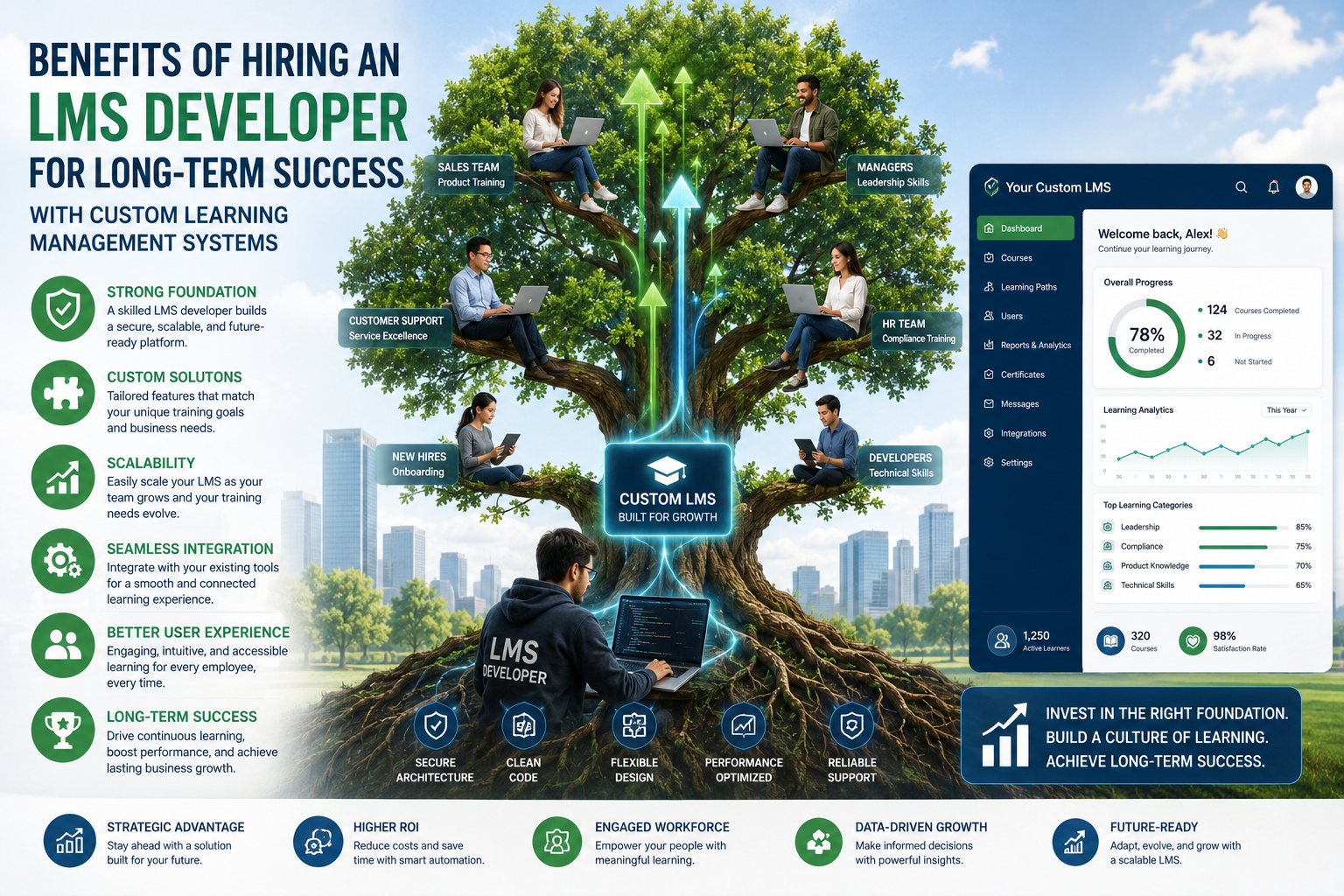
Generic platforms force you to adapt to their roadmap. A skilled LMS developer builds or customizes a system around your specific needs, processes, and growth plans.
This means you get unique features today and the ability to add new capabilities easily as your company evolves — without expensive workarounds or platform migrations later.
2. Lower Total Cost of Ownership
While the upfront cost is higher than a monthly subscription, a custom learning management system often becomes significantly cheaper over 3–5 years. You avoid recurring per-user fees, reduce dependency on third-party tools, and minimize time wasted on inefficient processes.
3. Better User Adoption and Long-Term Engagement
Developers who understand both technology and learning design create intuitive interfaces that employees actually enjoy using. This leads to higher completion rates and sustained engagement years after launch.
Comparison Insight: Platforms like Thinkific, Kajabi, and LearnWorlds are excellent for quick starts. However, as your training needs mature, a custom solution maintained by a professional developer usually outperforms on usability, integration depth, and adaptability.
4. Seamless Integrations and Scalability
An experienced LMS developer builds strong connections with your HR, CRM, and other tools from the beginning. As your organization grows, the system scales smoothly without performance issues or major redevelopment.
5. Full Ownership and Data Control
With a custom LMS, you own the code and your data. You’re not locked into a vendor’s pricing changes or policies. This independence provides peace of mind and strategic flexibility for the long term.
Real-World Example of Long-Term Success
A logistics company I worked with initially used a popular platform that became expensive and limiting as they expanded to multiple countries. After hiring a dedicated LMS developer, they built a tailored system with offline access, multi-language support, and automated compliance tracking. Five years later, they’re still using the core system with regular updates, saving thousands annually while maintaining excellent training outcomes.
Step-by-Step: How to Maximize Long-Term Value with an LMS Developer
- Choose the Right Developer — Prioritize experience with long-term projects and your industry.
- Focus on Scalable Architecture — Plan for future growth during initial development.
- Build Maintainable Code — Ensure the system is easy and affordable to update.
- Include Proper Documentation — Make it simple for your team or future developers to manage.
- Establish Ongoing Support — Agree on maintenance plans from day one.
- Review Annually — Schedule check-ups to add features and optimize performance.
- Train Internal Champions — Empower your team to handle day-to-day content and reporting.
This approach turns your LMS into a durable business asset.
Common Mistakes That Hurt Long-Term Success
- Choosing the cheapest developer instead of the most experienced
- Focusing only on launch date instead of 3-year vision
- Skipping proper documentation and knowledge transfer
- Underestimating ongoing maintenance needs
- Not planning for regular updates and security patches
Avoiding these mistakes helps ensure your investment delivers value for many years. Explore reliable long-term development partnerships at Digital Wind IT.
FAQ: Hiring an LMS Developer for Long-Term Success
How long does a custom LMS typically last?
With proper development and maintenance, a well-built system can serve effectively for 5–8 years or more.
Is hiring a developer more expensive long-term?
Usually the opposite. Most businesses see lower total costs and higher returns after the first 18–24 months.
Can I start with a ready-made platform and hire a developer later?
Yes. Many successful projects begin with customization of existing platforms before moving to more custom solutions.
What should I look for in an LMS developer for long-term projects?
Strong portfolio of maintained systems, clear communication, modern technical skills, and willingness to provide ongoing support.
How do I ensure the system remains relevant years later?
Choose a developer who uses flexible, modern architecture and includes regular update plans.
Build a Training System That Lasts
Hiring a professional LMS developer is an investment in long-term success. You get a learning management system that evolves with your business, reduces ongoing costs, improves employee performance, and gives you true ownership.
Don’t settle for short-term solutions that become problems later. Build something durable from the start.
Ready to create a custom learning management system designed for lasting success? Visit Digital Wind IT for expert development or connect with me directly at Shihab Morshed.
The companies that treat their training platform as a strategic long-term asset are the ones building stronger, more capable teams year after year.