Employee retention has become one of the biggest challenges for businesses today. The cost of losing a good employee goes far beyond hiring — it includes lost knowledge, team disruption, and lower morale.
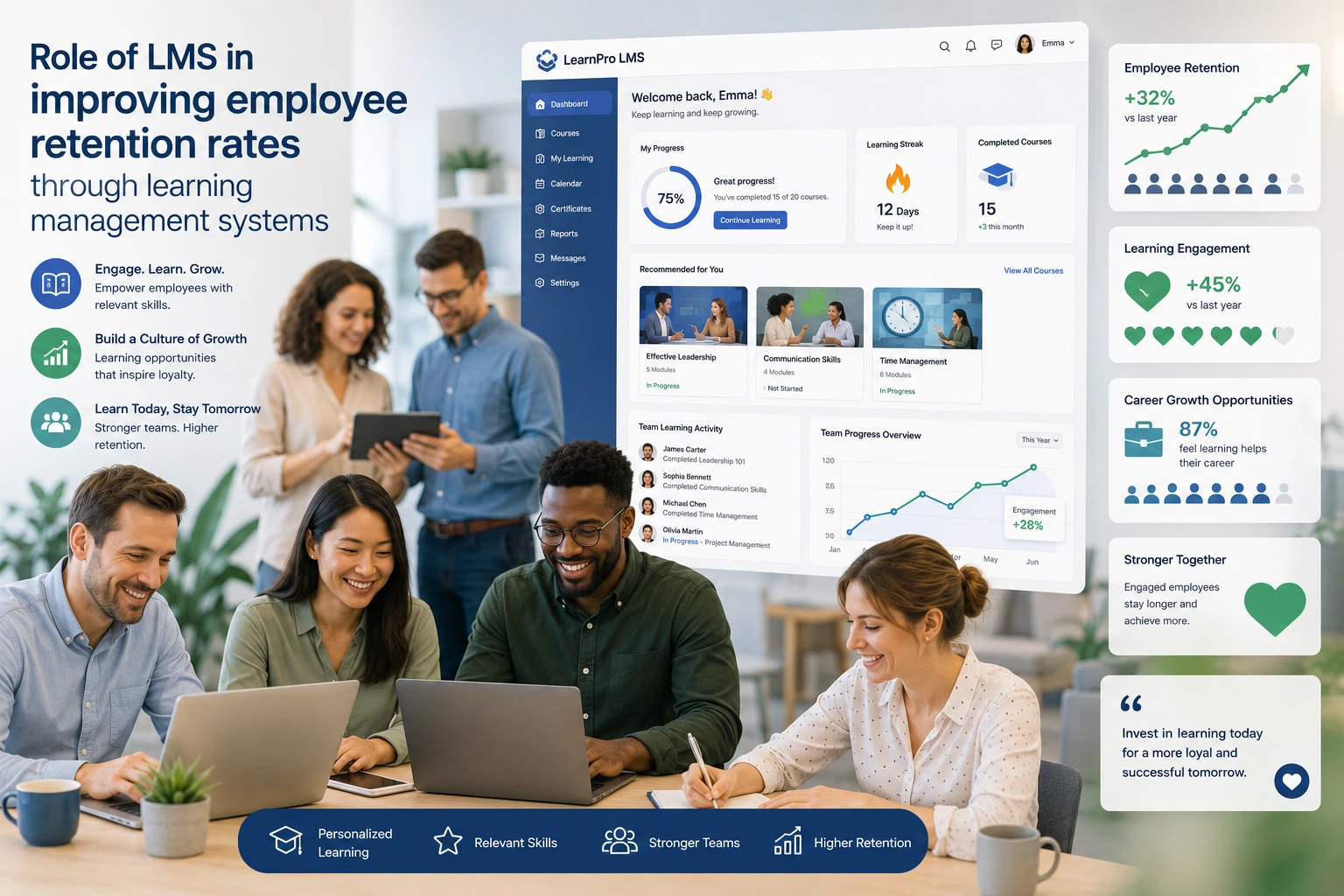
After working with many companies on their training systems, I’ve seen how a well-implemented LMS (learning management system) quietly becomes one of the most effective retention tools. It’s not just about delivering courses. The right learning management system helps employees feel valued, supported, and invested in their growth.
In this post, I’ll explain the real role of an LMS in improving retention rates and share practical ways to make it work for your business.
Why Learning Opportunities Directly Impact Retention
People don’t leave jobs — they leave bad experiences and limited growth. According to various studies, lack of career development is one of the top reasons employees quit. A strong LMS addresses this by making continuous learning part of company culture.
When employees have easy access to relevant training, clear career paths, and recognition for skill development, they feel the company cares about their future. This emotional connection significantly reduces turnover.
A custom learning content management system takes this even further by tailoring the experience to individual roles and ambitions.
How an LMS Improves Employee Retention
Here are the key mechanisms that actually drive results:
- Faster, Better Onboarding — New hires who feel competent and supported early are far more likely to stay beyond the first year.
- Personalized Career Development — Employees can access learning paths that match their goals, not just mandatory compliance training.
- Recognition and Gamification — Badges, certificates, and visible progress create a sense of achievement.
- Skill Relevance — Training that keeps skills current reduces the fear of becoming obsolete.
- Feedback and Growth Culture — Regular learning signals that the company invests in people, not just profits.
In my experience, companies that treat their LMS as a retention tool rather than just a compliance checkbox see measurable improvements in stay rates.
Real-World Example
A mid-sized software company I worked with had a 28% annual turnover rate, particularly among developers and customer support staff. Their old training approach was sporadic and mostly manual.
After implementing a tailored LMS with personalized learning paths, skill gap analysis, and leadership development tracks, their turnover dropped to 14% within 18 months. Employees specifically mentioned the learning opportunities as a major reason they stayed during exit interviews. The investment paid for itself many times over through reduced hiring costs.
Custom LMS vs Standard Platforms for Retention
Comparison Insight: Popular platforms like Kajabi, Thinkific, and LearnWorlds work well for external courses. However, for internal retention-focused training, a custom or heavily tailored LMS usually performs better because it can integrate deeply with HR systems, create internal career frameworks, and match your exact company culture.
Generic tools often feel impersonal. A custom learning management system feels like it was built for your people.
Step-by-Step: Using Your LMS to Boost Retention
Here’s how to make it practical:
- Align Learning with Retention Goals — Identify which skills and experiences matter most for keeping key talent.
- Create Personalized Onboarding Journeys — Make new hires feel welcomed and capable from day one.
- Build Career Development Paths — Offer clear tracks for promotion and skill advancement.
- Add Engagement Features — Use gamification, social learning, and regular feedback mechanisms.
- Integrate with Performance Reviews — Connect learning achievements to real career conversations.
- Gather Regular Feedback — Ask employees what learning they want and need.
- Measure Retention Impact — Track correlation between learning activity and stay rates over time.
This structured approach turns your LMS into a genuine retention engine.
Common Mistakes That Limit LMS Impact on Retention
- Treating the LMS only as a compliance tool instead of a growth platform
- Using generic, boring content that feels irrelevant
- Poor user experience that frustrates employees
- Lack of management involvement and promotion of learning
- No connection between training and actual career opportunities
Fixing these issues can dramatically improve both usage and retention outcomes. If your current setup needs improvement, consider exploring better options at Digital Wind IT.
FAQ: LMS and Employee Retention
How quickly can an LMS improve retention rates?
Most companies see noticeable improvements within 6–12 months, with stronger results after consistent use.
Is a custom LMS necessary for good retention results?
Not always, but it usually delivers stronger outcomes for companies that want personalized, branded experiences.
What features matter most for retention?
Personalized learning paths, easy mobile access, career development tracks, and recognition elements tend to have the biggest impact.
Can small businesses use LMS for retention?
Yes. Even a focused custom or well-configured learning management system can make a big difference for smaller teams.
How do you measure LMS impact on retention?
Track learning participation, skill development, employee satisfaction scores, and compare retention rates between active users and non-users.
Build Loyalty Through Better Learning
A modern LMS does much more than deliver training. It shows employees that their growth matters to the company. This sense of investment and opportunity is one of the strongest drivers of long-term retention.
If you’re struggling with turnover or want to strengthen your team’s commitment, it’s worth evaluating how your learning management system can play a bigger role.
Ready to create learning experiences that help retain your best people? Visit Digital Wind IT for custom solutions or reach out through my site to discuss what would work best for your business.The companies that invest in their people’s development through effective LMS strategies are the ones building truly loyal and capable teams.