I’ve been building and redesigning websites for over a decade, and one truth stands out every single time: your website is often the first real interaction a potential customer has with your brand. In those first few seconds, they decide whether they trust you or hit the back button. A well-designed, responsive web design can make that decision easy—in your favor.
I’ve seen businesses double their leads after a proper website redesign services overhaul. Not because we added flashy animations, but because the site finally felt professional, fast, and easy to use on any device. If you’re running a business in 2026, ignoring responsive web design is like showing up to a client meeting in pajamas.
In this post, I’ll share what I’ve learned from working with dozens of clients—how great design directly impacts trust, conversions, and revenue. No fluff, just practical insights you can actually use.
What Responsive Web Design Really Means for Trust
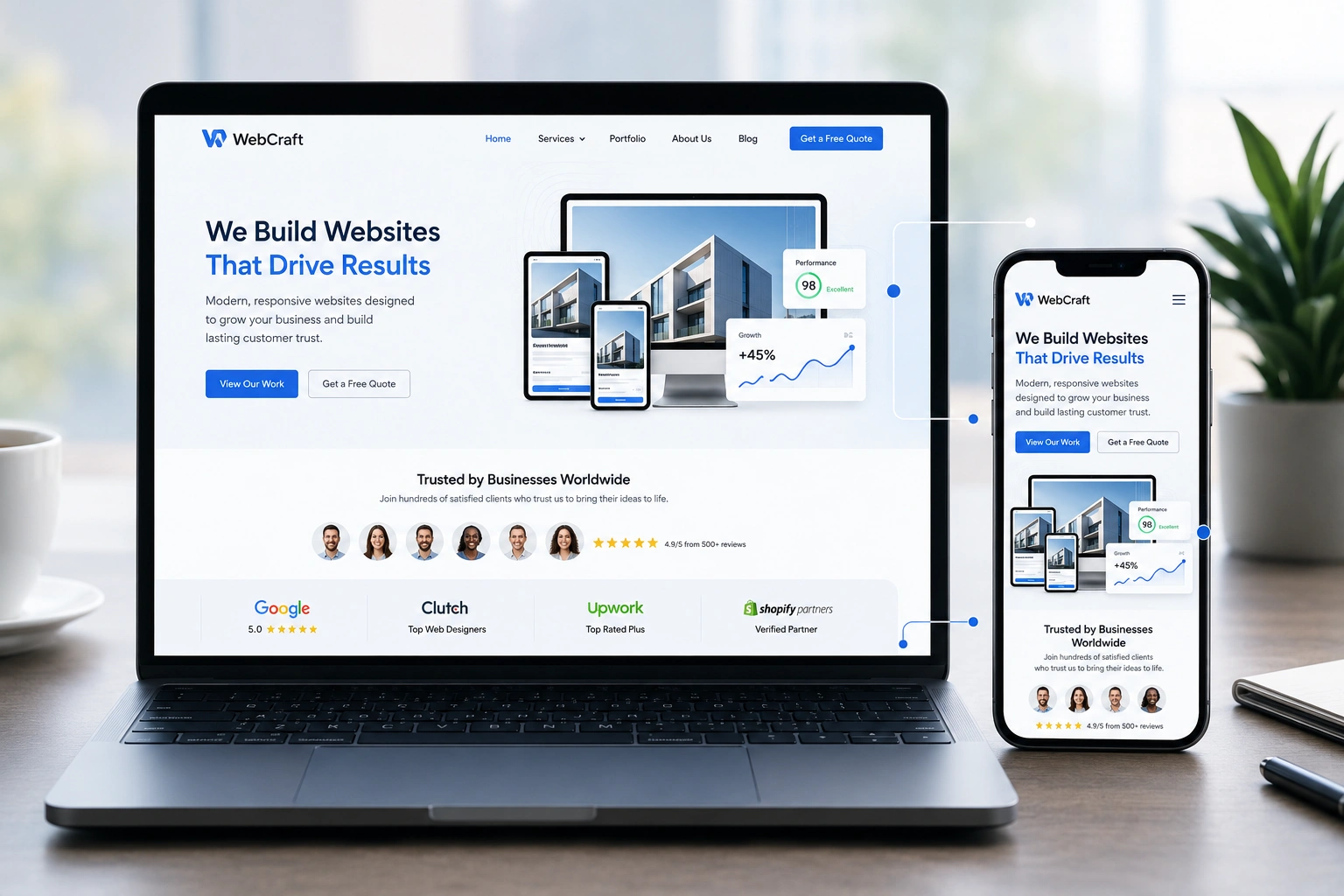
Responsive web design isn’t just about looking good on mobile. It means your website adapts perfectly to phones, tablets, laptops, and desktops without breaking or forcing users to zoom and scroll awkwardly.
When a site isn’t responsive, visitors immediately feel like the business doesn’t care about their experience. I remember one client who came to me after losing customers on mobile. Their old site looked fine on desktop but was almost unusable on phones. Bounce rate was over 70%. After website redesign services, it dropped dramatically.
People judge credibility in milliseconds. A clean, fast-loading, mobile-friendly site signals professionalism and attention to detail. A broken, outdated one screams the opposite.
How Good Design Directly Builds Customer Confidence
Trust isn’t built with fancy words—it’s built through experience. Here’s what I consistently see working:
- Speed and performance: Sites that load in under 3 seconds keep users engaged. Slow sites destroy trust instantly.
- Clear navigation and structure: When visitors can find what they need without thinking, they feel the business is organized and competent.
- Consistent branding: Professional colors, typography, and layout make your business look established.
- Social proof elements: Testimonials, case studies, and trust badges placed thoughtfully reinforce credibility.
I always tell clients that good websites design company work isn’t about creativity for creativity’s sake. It’s about removing friction and building confidence at every step.
Real Impact on Business Results
One of my clients, a local service business, came to me for website redesign services. Their old site was built years ago on a basic template. It wasn’t mobile-friendly, forms didn’t work properly on phones, and content looked dated.
Within three months of launching the new responsive site:
- Organic traffic increased by 85%
- Contact form submissions nearly tripled
- Conversion rate from visitor to lead jumped from 2.1% to 6.8%
These aren’t made-up numbers. They’re typical when you combine solid responsive web design with proper strategy. Another client in e-commerce saw cart abandonment drop significantly after we optimized their checkout experience across devices.
According to industry data, mobile accounts for over half of all web traffic. If your site frustrates mobile users, you’re silently telling them you don’t value their time.
Step-by-Step: Creating a Trust-Building Website
Here’s the exact process I use when delivering website redesign services:
- Audit the current site — I check loading speed, mobile experience, broken links, and user flow. Tools like Google PageSpeed Insights reveal the biggest problems fast.
- Define clear goals — What should visitors do? Book a call? Buy a product? Read content? Every design decision supports that goal.
- Focus on user experience (UX) — Simple navigation, plenty of white space, readable fonts, and logical layout. I test everything on real devices.
- Build with the right platform — For most clients, I recommend WordPress for flexibility or Webflow when they want more design control without code.
- Optimize for trust signals — Strategic placement of testimonials, security badges, clear contact info, and professional imagery.
- Test and launch — Multiple rounds of testing on different devices and browsers before going live.
This structured approach consistently delivers results far better than generic templates.
Common Mistakes That Kill Trust
I’ve seen the same errors repeatedly when businesses try to handle design themselves or hire the wrong websites design company:
- Using free templates without customization — They look generic and scream “small operation.”
- Ignoring mobile users completely — One of the fastest ways to lose credibility today.
- Overloading pages with too much text and poor hierarchy.
- Slow loading times due to unoptimized images and heavy plugins.
- Inconsistent design across pages — Different fonts and colors make the site feel unprofessional.
The fix is usually a proper redesign focused on simplicity and user needs rather than trying to impress with complexity.
Choosing the Right Partner for Your Redesign
Not every websites design company understands trust-building design. Look for teams that ask about your business goals first instead of jumping straight into visuals. Check their own website—does it load fast? Is it responsive? Do you trust them based on their online presence?
At Digital Wind IT, we focus on practical, results-driven websites. You can also learn more about my approach on my personal site.
FAQ: Responsive Web Design and Customer Trust
How important is responsive design in 2026?
Extremely. With most searches happening on mobile, a non-responsive site instantly loses credibility. Google also prioritizes mobile-friendly websites in rankings.
How long does a typical website redesign take?
For most small to medium businesses, 4–8 weeks from start to launch, depending on complexity and content readiness.
Can a good design really increase conversions?
Yes. I’ve seen 2x–4x improvements when the redesign focuses on user experience and trust signals rather than just aesthetics.
Should I use WordPress or something else?
WordPress powers over 40% of the web for good reason—it’s flexible and scalable. For more advanced design control, Webflow is excellent.
How do I know if my current site is hurting trust?
High bounce rates, low time on site, and poor mobile performance are clear indicators. A professional audit can reveal the issues quickly.
What’s the biggest mistake in website redesign?
Focusing only on looks instead of user journey and conversion goals. Beautiful sites that don’t convert are expensive missed opportunities.
Building Websites That People Trust
A strong responsive web design isn’t a nice-to-have—it’s essential for any serious business today. It shows you respect your customers’ time and care about their experience.
If your website feels outdated, slow, or difficult to use on mobile, it’s probably costing you customers every single day. The good news is that a thoughtful redesign can turn things around faster than you might expect.
Ready to build a website that actually earns trust and grows your business? Reach out to me or check our services at Digital Wind IT. Let’s create something your customers will love and trust from the first click.