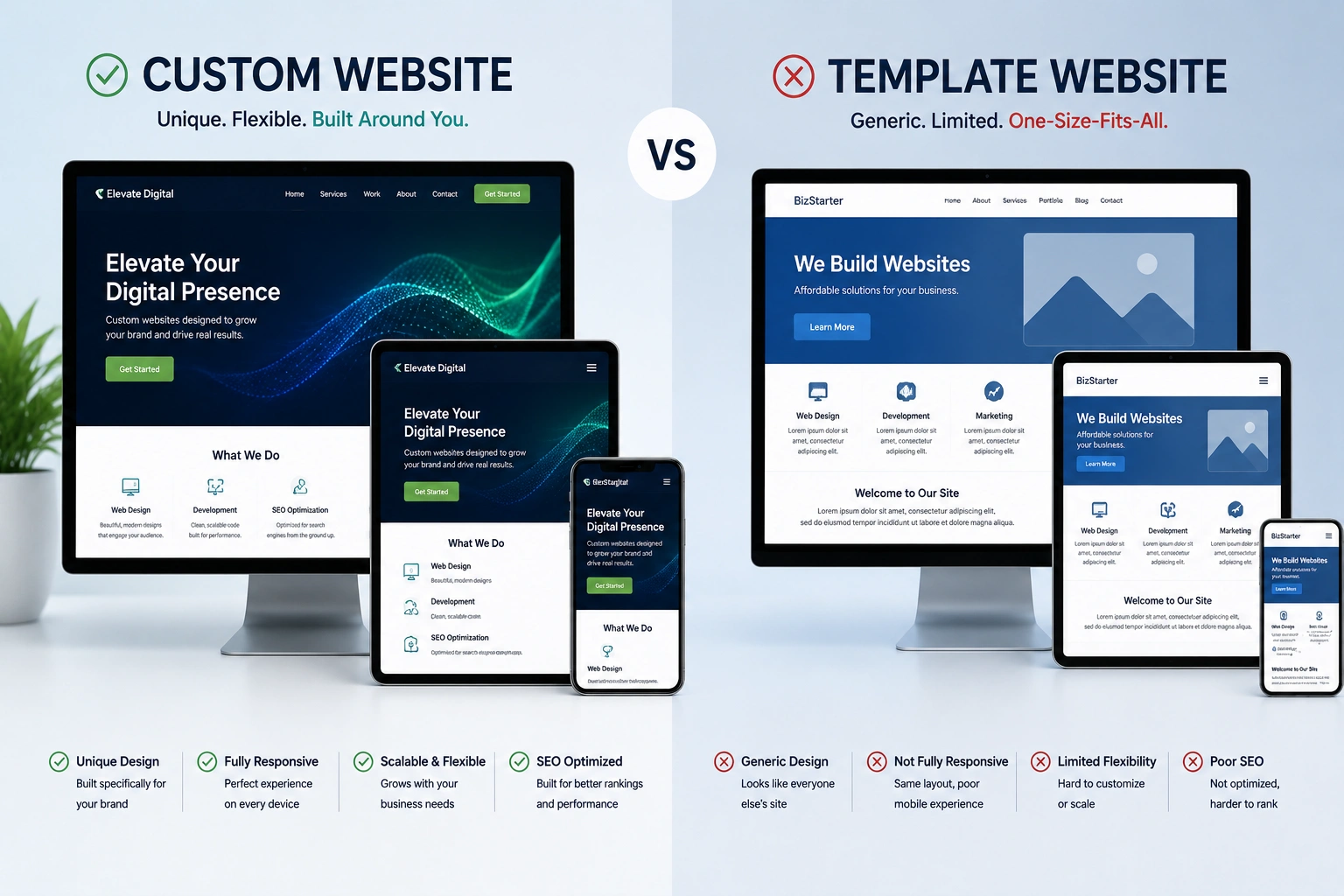
I’ve built dozens of websites over the years, both from scratch and by tweaking existing templates. The difference in results for my clients is night and day. A template might get you online fast, but a custom website built with responsive web design in mind actually grows with your business and delivers real returns.
If you’re a business owner or professional wondering whether to stick with a cheap template or invest in proper website redesign services, this post is for you. I’ll share what I’ve learned from real projects, the clear benefits of going custom, and practical steps to make the right choice.
Templates have their place—especially for quick tests or very simple needs. But for most growing brands, they become limiting fast. A custom approach from a websites design company that understands your goals creates something that stands out, performs better, and lasts longer.
What Responsive Web Design Really Means Today
Responsive web design isn’t just about looking okay on a phone. It means your site adapts intelligently to any screen size, loads quickly, and provides a smooth experience whether someone visits from a laptop in a coffee shop or a phone on the subway.
Google loves responsive sites because they deliver better user signals—lower bounce rates, longer time on page, and higher engagement. In my experience, clients who switched to fully responsive custom builds saw noticeable improvements in search rankings within months.
Templates often claim responsiveness, but they frequently break on edge cases or require constant plugin fixes. Custom code lets you control every breakpoint and prioritize performance from day one.
Key Benefits of Custom Websites Over Templates
From performance to branding, the advantages stack up quickly once you move beyond basic needs.
Better Performance and Speed
Custom sites can be optimized surgically. You control the code, images, and scripts. Templates come loaded with bloat—unused features, heavy frameworks, and generic elements that slow everything down. I’ve seen template sites take 5+ seconds to load on mobile; custom versions often hit under 2 seconds.
True Uniqueness and Brand Control
Your brand deserves more than a look that thousands of other sites share. Custom design lets you reflect your personality, values, and unique selling points. Templates force you into pre-made boxes.
Superior SEO Foundation
Search engines reward clean code and structured data. With a custom build, we implement schema, perfect heading structure, and fast loading times naturally. Templates often rely on plugins that create duplicate content or slow performance issues.
Scalability for Growth
As your business evolves—adding new services, e-commerce, or member areas—a custom site expands easily. Templates hit walls quickly, forcing expensive rebuilds or awkward workarounds.
Enhanced Security
Fewer plugins and dependencies mean fewer vulnerabilities. Custom sites built on solid foundations like WordPress or Webflow get security updates tailored to your setup.
How Custom Websites Drive Better Business Results
One client came to me after struggling with a popular template. Their conversion rate hovered around 1.2%. After a full website redesign services project focused on responsive web design, we streamlined the user journey, improved mobile experience, and aligned the design with their brand story. Conversions jumped to over 4% within six months.
Data backs this up. Custom sites often convert 2–5x better than generic templates when properly designed around the audience. Visitors trust unique, professional designs more—they signal investment and attention to detail.
For service-based businesses like consultants, coaches, or agencies, a custom site becomes a powerful sales tool that works 24/7. It reflects expertise instead of looking like everyone else.
Step-by-Step: Moving from Template to Custom Website
Here’s the practical process I follow with clients:
- Audit Your Current Site Check loading speed (use PageSpeed Insights), mobile usability, and conversion bottlenecks. Identify what’s working and what’s holding you back.
- Define Clear Goals What should the site achieve? Lead generation, sales, portfolio showcase? Be specific about your target audience and desired actions.
- Choose the Right Foundation For flexibility, I often recommend WordPress.org for content-heavy sites or Webflow for more design control. Both support excellent responsive web design.
- Design and Develop with Purpose Focus on user flow first, then visuals. Ensure every element serves a goal. Test across devices early and often.
- Optimize for Performance and SEO Compress images, implement lazy loading, clean code, and set up proper analytics.
- Launch, Monitor, and Iterate Go live, track behavior, and make data-driven improvements. A good websites design company provides ongoing support here.
This process typically takes 4–12 weeks depending on complexity, but the results compound over years.
Common Mistakes to Avoid When Choosing or Building
Many businesses rush into templates thinking they’ll save money, only to pay more later in lost opportunities and redesigns.
- Ignoring Mobile Users: Over 60% of traffic is mobile. Non-responsive or poorly adapted templates kill conversions.
- Over-Reliance on Plugins: Templates often need many to function, creating security and speed issues.
- Copying Competitors: Using the same template as others in your niche makes you forgettable.
- Skipping Strategy: Jumping straight to design without clear goals leads to pretty but ineffective sites.
- Neglecting Future Needs: Choosing cheap now often means expensive migration later.
If your current template feels limiting or slow, it’s probably time for website redesign services.
FAQ: Custom Websites vs Templates
How much more expensive is a custom website?
Expect higher upfront investment, but strong ROI through better performance and conversions. Templates seem cheaper initially but often require ongoing fixes or full replacement.
Can I make a template site responsive?
Somewhat, but true mobile-first responsive web design is harder to achieve perfectly with most templates. Custom builds do it naturally.
Is WordPress only for templates?
No. WordPress.org powers millions of custom sites. With the right developer, it offers incredible flexibility without starting from absolute zero.
How long does a custom website take?
Typically 1–3 months for most business sites. Complex projects take longer, but the quality difference shows immediately.
Will a custom site help my SEO?
Yes—clean code, fast loading, and proper structure give you advantages templates struggle to match.
When does a template actually make sense?
For simple landing pages, personal blogs, or very early-stage testing. Most established businesses benefit more from custom.
Ready to Build Something That Actually Works?
Templates have helped many get started, but they rarely deliver the professional edge that drives sustainable growth. A well-crafted custom website with excellent responsive web design becomes one of your best business assets—unique, fast, scalable, and conversion-focused.
If you’re tired of fighting limitations or ready for a site that truly represents your brand, I’m here to help. Check out my personal site or explore Digital Wind IT services for more on how we approach projects. Let’s discuss your goals and create something built to last.