Compliance training is no longer optional. Whether you operate in finance, healthcare, manufacturing, or any regulated industry, failing to meet training requirements can lead to heavy fines, legal issues, and reputational damage.
After helping multiple organizations build training systems, I’ve found that generic platforms often create more compliance headaches than they solve. A custom LMS, on the other hand, is built to meet your exact regulatory needs.
In this article, I share seven practical ways a tailored learning management system strengthens your training compliance while saving time and reducing risk.
Why Generic LMS Falls Short on Compliance
Most off-the-shelf tools are designed for broad use. They offer basic tracking but lack the specific workflows, reporting formats, and flexibility that compliance demands.
A custom learning content management system aligns directly with your industry regulations, internal policies, and audit requirements. This makes compliance less stressful and more reliable.
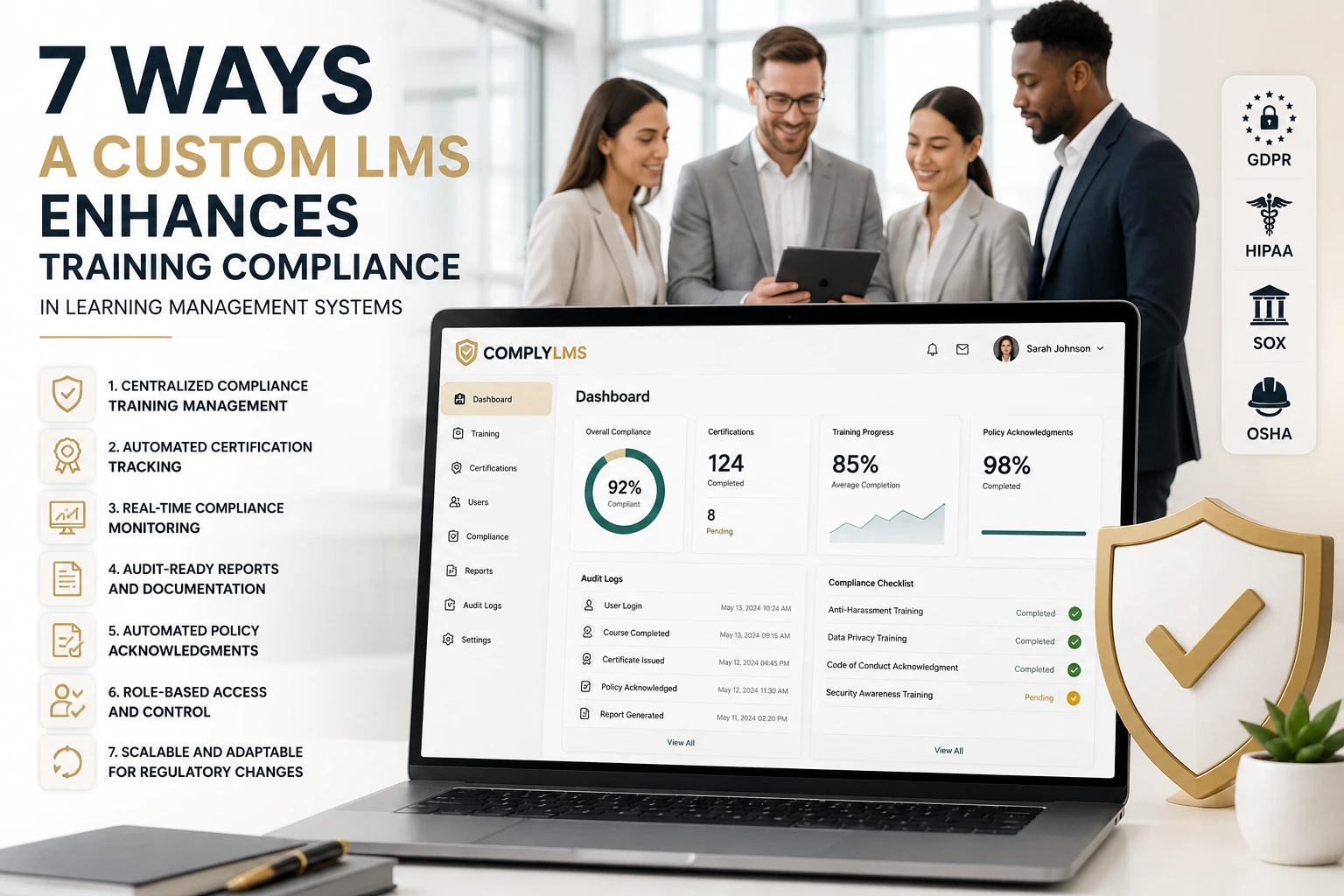
7 Ways a Custom LMS Enhances Training Compliance
Here are the most impactful ways a custom LMS delivers superior compliance results:
1. Highly Tailored Compliance Content
You can build courses that match your exact policies, procedures, and regulatory standards instead of using generic templates. This ensures employees learn what actually applies to your business.
2. Automated Assignment and Tracking
A custom LMS automatically assigns mandatory training based on role, department, location, or hire date. No more manual spreadsheets or chasing employees.
3. Real-Time Audit-Ready Reporting
Generate detailed, exportable reports instantly with the exact fields auditors want. Custom fields and dashboards make compliance reviews fast and accurate.
4. Automated Reminders and Renewals
The system sends timely notifications for recurring training, certification expirations, and policy updates, dramatically reducing missed deadlines.
5. Detailed Audit Trails and Version Control
Every action is logged — who completed what, when, and how. Content versions are tracked so you can prove which policy version employees were trained on.
6. Role-Based and Adaptive Learning Paths
Employees only see relevant compliance modules. New managers get leadership compliance, while technicians get safety training. This improves completion rates and relevance.
7. Easy Content Updates for Changing Regulations
When laws or internal policies change, non-technical admins can quickly update materials across the entire system without disrupting active training.
These seven capabilities turn compliance from a burden into a well-oiled process.
Real-World Example of Improved Compliance
A healthcare client I worked with previously struggled with manual tracking across multiple clinics. They faced audit stress every quarter. After implementing a custom LMS, they achieved 98% on-time completion rates and passed their last three regulatory audits with zero findings. The auditors specifically praised the clarity of their reports and training records.
Custom LMS vs Popular Platforms for Compliance
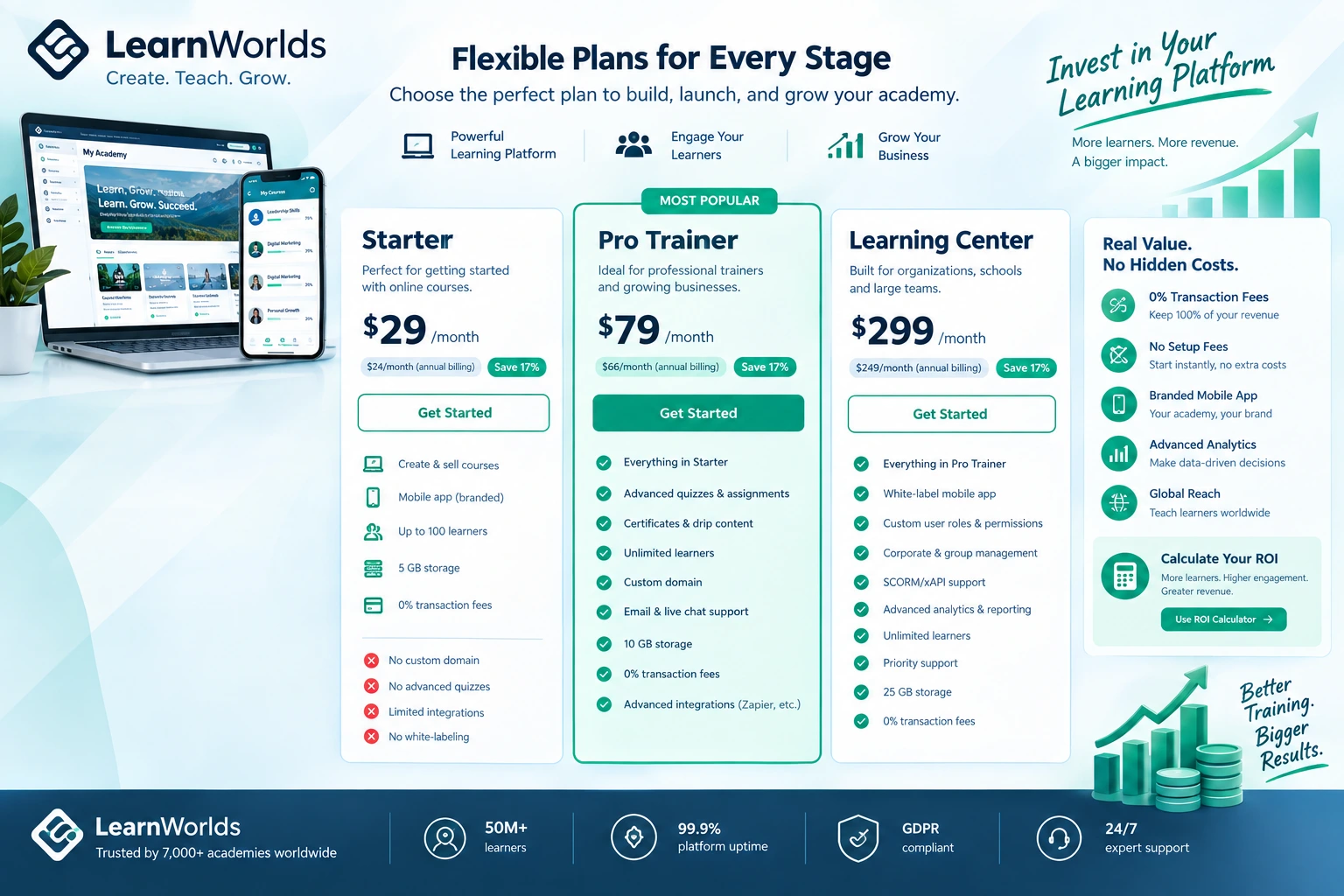
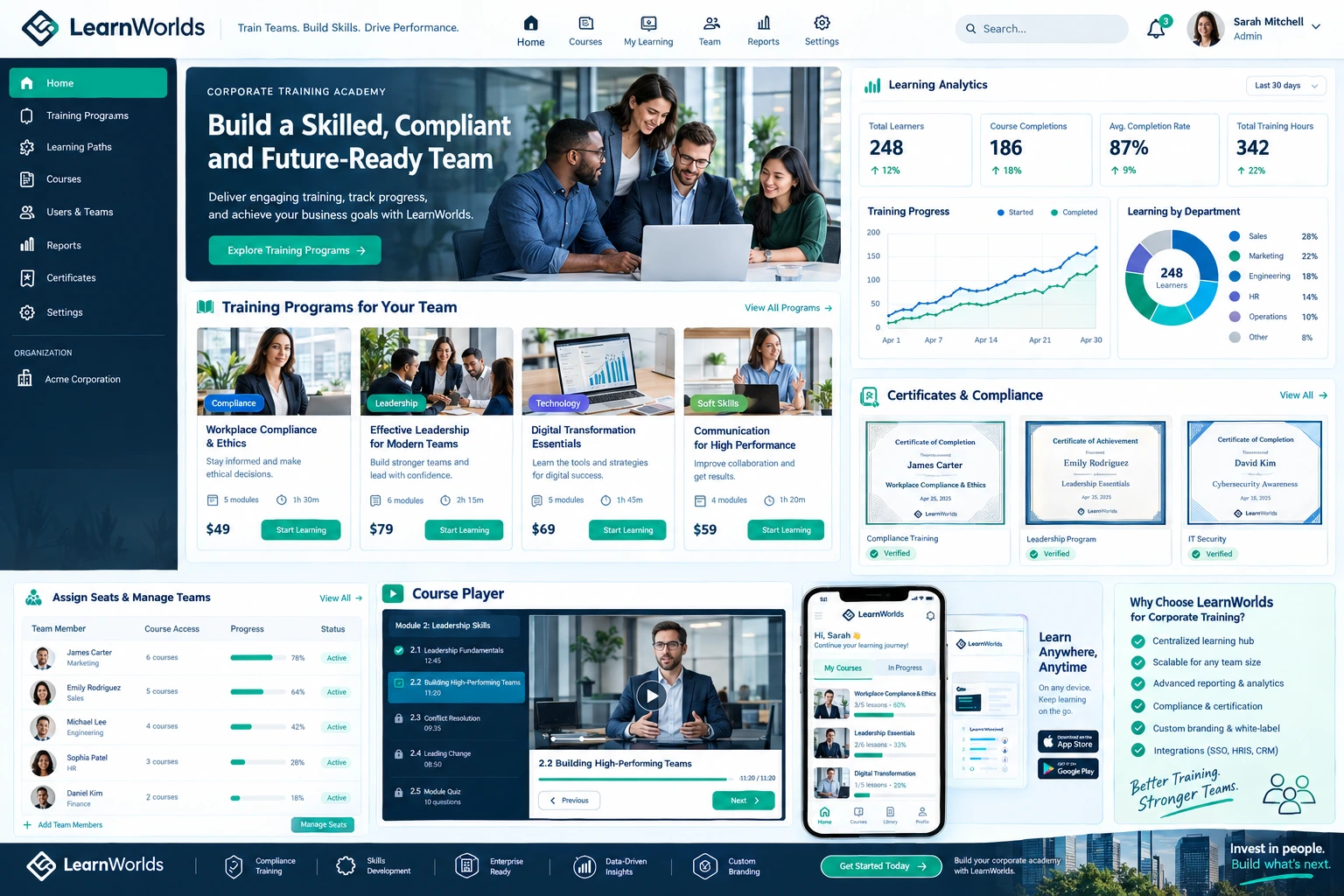
Comparison Insight: Platforms like Thinkific and Kajabi are excellent for selling courses, while LearnWorlds offers good engagement tools. However, for strict compliance needs involving sensitive data, specific reporting formats, and deep HR integrations, a custom learning management system provides better control and peace of mind.
Step-by-Step: Implementing a Compliance-Focused Custom LMS
Here’s how to do it right:
- Map All Compliance Requirements — List every mandatory training by role and regulation.
- Define Success Metrics — Set targets for completion rates, audit readiness, and renewal timeliness.
- Design Custom Workflows — Build automated triggers and approval processes.
- Set Up Robust Reporting — Create templates that match your audit needs.
- Test Thoroughly — Run a pilot with one department or location.
- Train Administrators — Ensure your team can manage the system independently.
- Schedule Regular Reviews — Plan quarterly checks to keep everything current.
This approach ensures quick wins and long-term reliability.
Common Mistakes That Weaken Compliance
- Relying on generic platforms without proper customization
- Failing to involve compliance officers during system design
- Poor mobile support for field or shift workers
- Inadequate version control when policies change
- Lack of automated alerts for expiring certifications
I’ve seen companies pay fines simply because their LMS couldn’t prove training happened on the required schedule. Avoid these issues by working with experienced teams. Explore reliable options at Digital Wind IT.
FAQ: Custom LMS and Training Compliance
Is a custom LMS necessary for compliance training?
Not always required, but it becomes highly valuable when you have complex or industry-specific requirements.
How does a custom LMS reduce compliance risk?
Through automation, detailed logging, and accurate reporting that prove due diligence during audits.
Can small businesses benefit from compliance-focused custom LMS?
Yes. Many smaller organizations in regulated fields gain the most from tailored systems.
How long does it take to implement a compliance LMS?
A focused custom solution typically launches in 3–6 months, depending on complexity.
What makes reporting better in a custom learning management system?
You can design reports with exactly the data points regulators or auditors request, saving hours during reviews.
Strengthen Your Compliance with a Custom LMS
A well-designed custom LMS does more than deliver training — it becomes your strongest defense during audits and your most reliable tool for maintaining standards.
If regulatory compliance keeps you up at night or consumes too many resources, it may be time to consider a tailored solution. Visit Digital Wind IT to explore custom development or connect with me at Shihab Morshed for practical advice.Investing in the right learning management system protects your business while making compliance simpler for everyone involved.