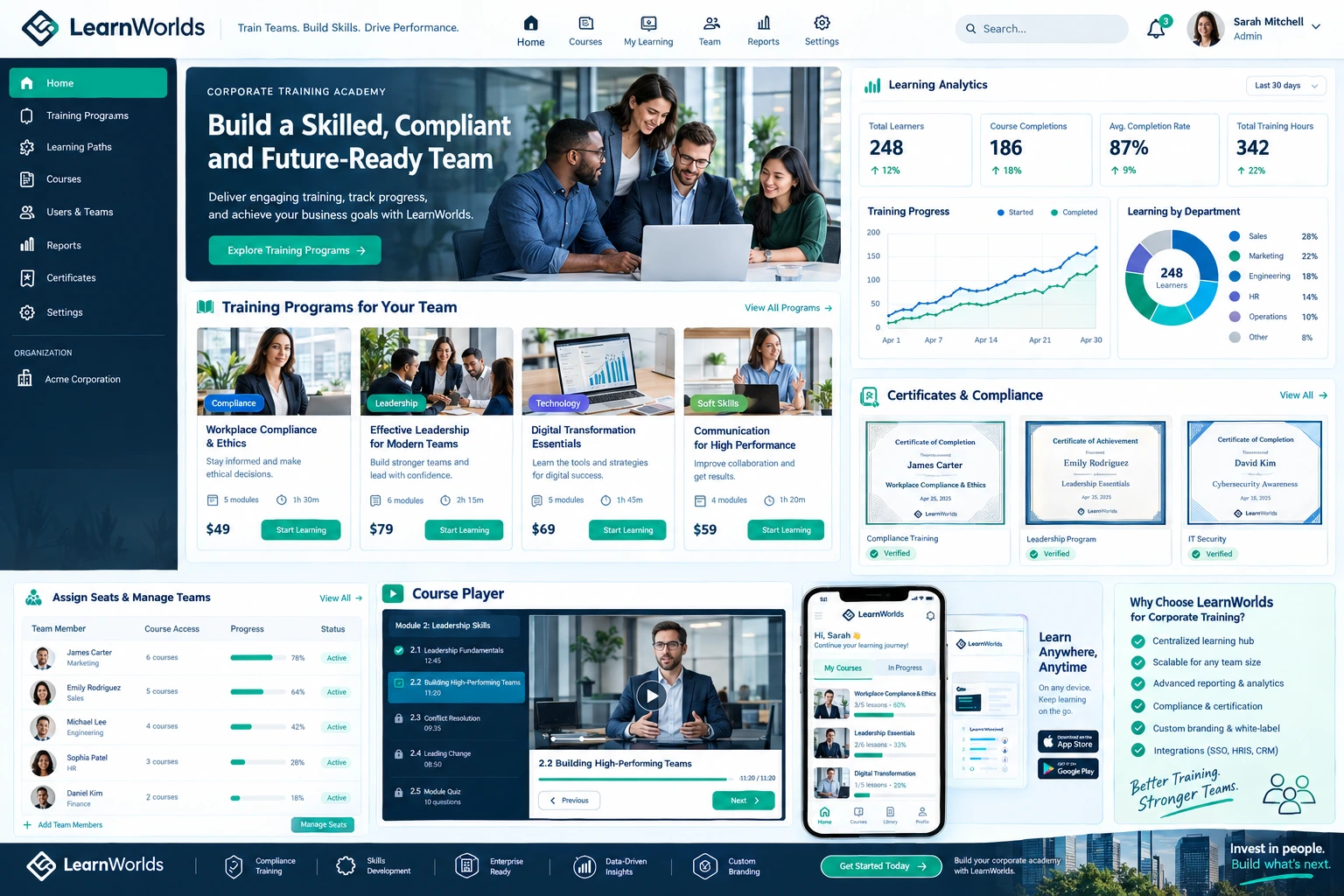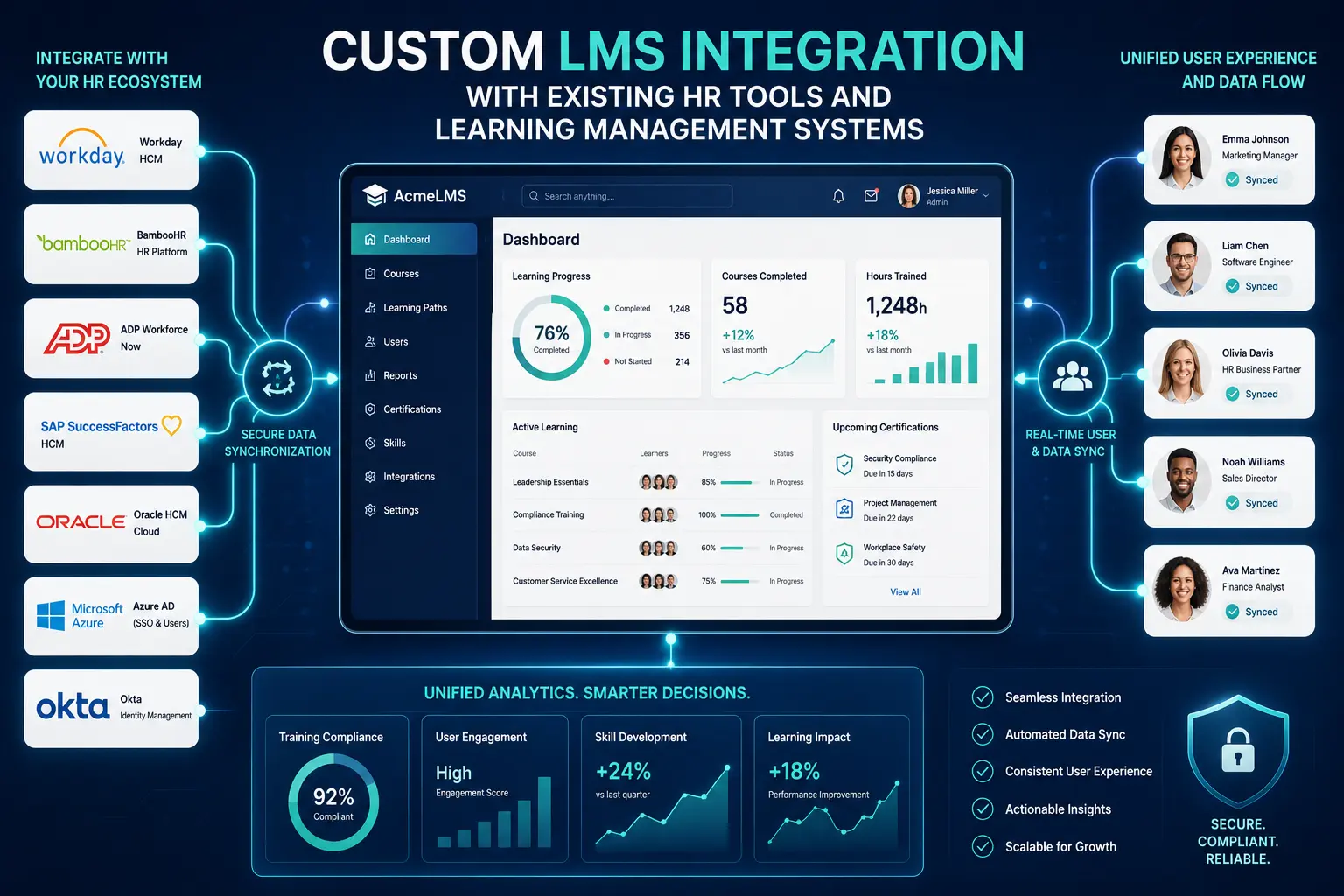
Most companies already use solid HR tools — BambooHR, Workday, ADP, or similar systems. The problem? Training data lives in a separate silo. This creates manual work, inconsistent records, and missed opportunities for employee development.
A custom LMS solves this by connecting directly with your existing HR infrastructure. From my experience helping businesses build tailored training platforms, proper integration turns fragmented systems into one smooth employee experience.
In this post, I’ll explain how a custom learning management system integrates with HR tools, the real benefits, and how to do it right.
Why HR-LMS Integration Matters
Without integration, you duplicate employee data, manually enroll people in courses, and struggle to link training with performance reviews. This wastes time and creates inaccurate reporting.
A well-integrated custom LMS automatically syncs employee information, tracks development against HR goals, and gives leadership a complete view of talent growth.
Key Benefits of Custom LMS and HR Tool Integration
Here’s what changes when the systems work together:
- Automated User Management — New hires are automatically added to the LMS with the right learning paths based on role and department.
- Single Source of Truth — Employee profiles, progress, and certifications stay consistent across HR and training systems.
- Smarter Insights — Combine training data with performance metrics for better talent decisions.
- Streamlined Workflows — Automatic course assignments based on promotions, policy changes, or compliance needs.
- Reduced Administrative Burden — HR and L&D teams spend less time on manual updates and data entry.
These benefits compound quickly, especially as your company grows.
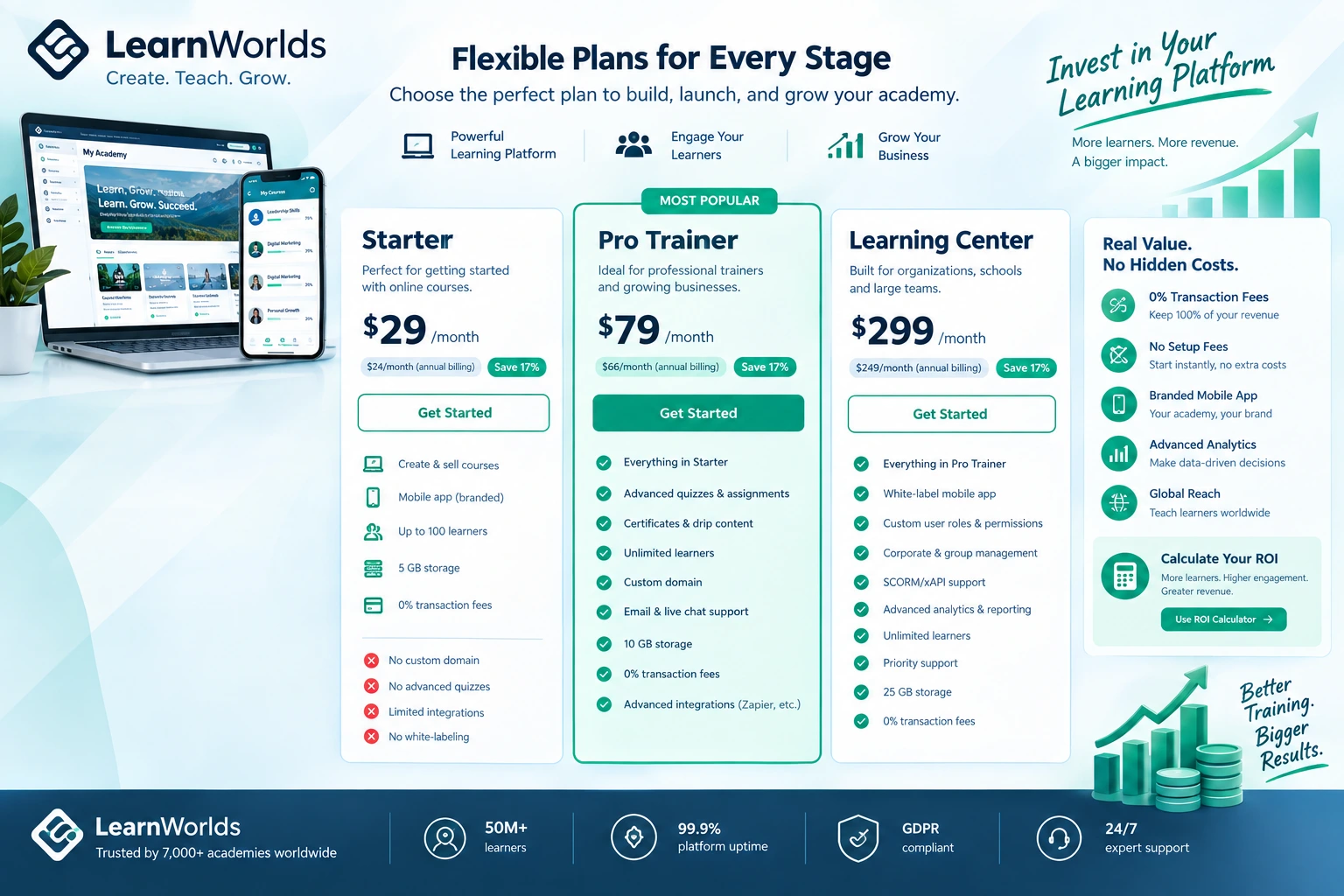
Comparison Insight: Platforms like Kajabi or Thinkific offer basic integrations suitable for course selling. LearnWorlds provides good engagement tools. However, for deep, real-time synchronization with enterprise HR systems, a custom LMS gives you far more control and flexibility.
Real-World Integration Example
A growing fintech company I worked with used BambooHR for employee data but struggled with training follow-up. After building a custom learning management system with direct integration, new employee onboarding became automatic. Training completion automatically updated HR records, and managers received alerts for overdue compliance courses. The result? Onboarding time dropped by 40%, and compliance audit preparation became significantly easier.
Common Integration Methods Used in Custom LMS
Modern custom LMS projects typically use one or more of these approaches:
- API Integration — Real-time or scheduled data exchange using RESTful APIs.
- Webhooks — Instant notifications when events happen in HR (e.g., new hire added).
- SCIM Protocol — For automated user provisioning and de-provisioning.
- Middleware Tools — Solutions like Zapier or custom connectors for complex systems.
- Database-Level Sync — Secure, direct connections for high-volume data needs (with proper security measures).
An experienced LMS developer will recommend the best mix based on your specific HR tools and security requirements.
Step-by-Step: Integrating Custom LMS with HR Tools
Here’s a practical implementation process:
- Map Your Current Systems — List all HR tools and the data points you want to sync (employee info, departments, job titles, etc.).
- Define Integration Goals — Decide what should happen automatically (enrollment, progress updates, reporting).
- Choose Integration Approach — Work with your developer to select APIs, webhooks, or middleware.
- Ensure Security and Compliance — Implement proper authentication, data encryption, and access controls.
- Build and Test — Start with a pilot group before full rollout.
- Monitor and Optimize — Set up error logging and regular sync checks.
- Document Everything — Create guides for your internal team.
This structured method minimizes disruption and delivers fast value.
Common Integration Challenges and How to Avoid Them
- Data Inconsistencies — Solve by setting clear rules for which system is the source of truth.
- Security Concerns — Always use secure authentication and conduct regular audits.
- Performance Issues — Schedule heavy syncs during off-peak hours.
- Scope Creep — Start with essential integrations and expand later.
- Poor Developer Experience — Choose teams with proven HR system integration history.
If you’re facing these issues, feel free to explore reliable development support at Digital Wind IT.
FAQ: Custom LMS and HR Integration
Which HR tools integrate best with a custom LMS?
Most modern tools (BambooHR, Workday, ADP, Bamboo, UKG, etc.) integrate well through APIs. Older legacy systems may need custom connectors.
How long does LMS-HR integration usually take?
Simple integrations can be ready in 3–6 weeks. Complex enterprise setups typically take 2–4 months.
Is integration expensive?
Initial development has a cost, but it quickly pays off through time savings and better data accuracy.
Can a custom learning management system sync training progress back to HR?
Yes. Most projects include bidirectional sync for completion status, certifications, and skill development.
Do I need a full custom LMS for good integration?
Not necessarily, but heavy customization or specific workflows usually require a tailored LMS for optimal results.
Create a Unified Employee Experience
A custom LMS that integrates deeply with your existing HR tools eliminates silos and creates a seamless journey from hiring to continuous development. Employees get relevant training at the right time, while HR and L&D teams work more efficiently.
If your training and HR systems still feel disconnected, it’s worth exploring how a tailored solution can bring them together. Visit Digital Wind IT for custom development expertise or reach out through my site to discuss your specific setup.The most successful companies don’t treat training as separate from HR — they make them work as one powerful system. A well-integrated learning management system helps you get there.