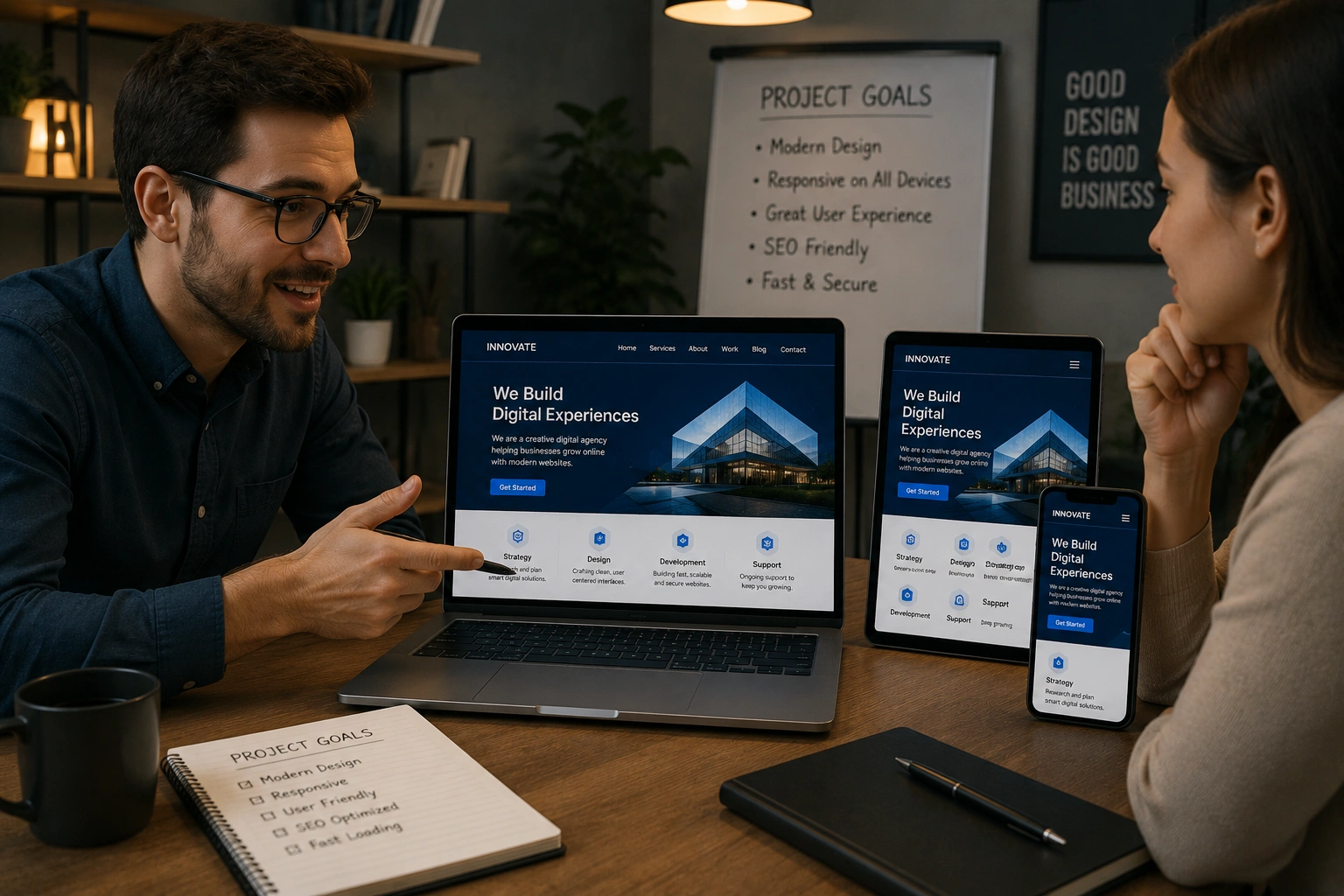
I’ve worked with dozens of clients over the years who came to me frustrated after bad experiences. Their previous sites looked okay on a desktop but broke on phones. Or worse, the developer delivered something pretty that had nothing to do with growing their business.
If you’re looking for responsive web design that actually supports your goals, choosing the right responsive web design makes all the difference. It’s not just about finding someone who codes. You need a partner who listens, asks smart questions, and builds a site that converts visitors into customers no matter what device they use.
In this post, I’ll walk you through exactly what to look for, red flags to avoid, and the questions that separate good developers from great ones. Whether you need website redesign services or a fresh build, these insights come from real projects I’ve handled.
Why Responsive Web Design Matters More Than Ever
Mobile traffic dominates the web. Studies show that around 90% of websites now use responsive web design, and those that do see 11% higher conversion rates. Non-responsive sites lose visitors fast—73% of people cite poor mobile experience as the reason they bounce.
A developer who understands responsive web design doesn’t just make your site shrink on phones. They plan layouts, navigation, images, and speeds so the experience feels native on every screen. This directly impacts SEO, user trust, and sales.
I once redesigned a client’s e-commerce site that looked fine on desktop but loaded slowly on mobile. After implementing proper responsive techniques, their mobile conversions jumped noticeably within weeks. That’s the kind of result you want.
What Makes a Developer Truly Understand Your Goals
Technical skills alone aren’t enough. The best developers treat your project like a business problem, not just a coding task.
Look for someone who:
- Asks about your target audience, competitors, and what success looks like for you.
- Discusses website redesign services in terms of outcomes—more leads, better engagement, easier content updates.
- Shows examples from similar industries or business models.
Websites design company options range from big agencies to independent professionals like me. For many small to medium businesses, a focused expert often delivers better alignment than a large team where your project might get passed around.
I always start projects by mapping client goals to technical decisions. This prevents building features nobody uses and ensures the site supports actual business growth.
The Business Impact of Choosing the Right Partner
A good developer becomes an extension of your team. They help you avoid expensive rebuilds later and create a foundation for long-term success.
Compare freelancers who charge low rates versus experienced professionals. Cheap options often deliver template sites with hidden maintenance costs. A skilled partner invests time upfront in discovery, saving you money and headaches down the road.
For platforms like WordPress, Shopify, or Webflow, the right developer knows which tool fits your needs best. Check WordPress.org for open-source flexibility or Webflow.com for visual control without heavy coding.
In my experience, clients who invest in proper alignment see higher ROI through better user experience and easier scaling.
Step-by-Step: How to Choose the Right Web Developer
Here’s the practical process I recommend:
- Define Your Goals First Write down what you want: more sales, lead generation, blog traffic, or membership site? Be specific about timelines and budget.
- Review Portfolios Critically Don’t just look at pretty designs. Check if sites are fast, mobile-friendly, and still active. Visit them on your phone.
- Ask These Key Questions
- How do you learn about my business goals?
- Can you show me a past project with similar objectives?
- What’s your process for responsive web design testing?
- How do you handle ongoing maintenance and updates?
- Check References and Communication Speak with past clients. Pay attention to how responsive and clear the developer is during initial talks.
- Compare Proposals Look beyond price. The best proposal explains how they’ll achieve your goals, not just list features.
- Start Small if Needed Consider a redesign phase or prototype before full commitment.
Following these steps helped many of my clients avoid mismatched partnerships.
Common Mistakes and How to Avoid Them
From what I’ve seen, here are the biggest pitfalls:
- Choosing based on price alone: Low bids often mean corners cut on responsive testing or SEO foundations.
- Ignoring communication style: If they don’t listen well in the first call, it won’t improve.
- Skipping discovery: Developers who jump straight to design without understanding goals usually miss the mark.
- Not planning for maintenance: A beautiful site today becomes outdated fast without proper support.
- Overlooking mobile-first approach: Many still design desktop-first, leading to poor phone experiences.
Another frequent issue is hiring a websites design company that pushes their preferred stack instead of what’s best for you. Always clarify why they recommend certain technologies.
Real-World Example: A Recent Website Redesign
One client ran an online coaching business. Their old site looked dated and wasn’t mobile-optimized. They had high bounce rates on phones, which hurt bookings.
We focused on responsive web design with clean navigation, fast loading, and clear calls-to-action. I integrated tools that matched their content style and goals. Within months, their site traffic became more engaged, and conversion rates improved significantly. The key? We spent time upfront aligning on their audience and objectives rather than just making it “look nice.”
FAQ: Choosing a Web Developer
How much should I budget for responsive web design?
It varies by scope. Simple sites start lower, while custom website redesign services with complex features cost more. Focus on value and long-term ROI rather than the cheapest option.
Should I hire a freelancer or a websites design company?
Freelancers often offer more personal attention and flexibility. Agencies suit very large projects. For most businesses, an experienced independent developer provides great balance.
How long does a typical website redesign take?
Discovery and planning: 2–4 weeks. Design and development: 4–8 weeks. Testing and launch: 1–2 weeks. Timelines depend on complexity.
What if I need ongoing support after launch?
Choose a developer who offers maintenance packages. Regular updates keep your site secure and performing well.
How do I know if a developer understands my industry?
Review their portfolio for similar projects and ask detailed questions about past challenges in your field.
Is responsive design still important in 2026?
Absolutely. With mobile traffic dominant, it’s essential for user experience, SEO, and conversions.
Choosing Right Leads to Better Results
Finding a web developer who truly understands your goals takes some effort, but it pays off enormously. The right partner delivers responsive web design that works across devices, supports your business objectives, and grows with you.
If you’re ready for a site that actually helps your business instead of just looking good, I’d love to talk. Visit my site or check out our services at Digital Wind IT to see how we approach projects with your success in mind.
Don’t settle for generic work. Invest in a developer who listens and delivers results.