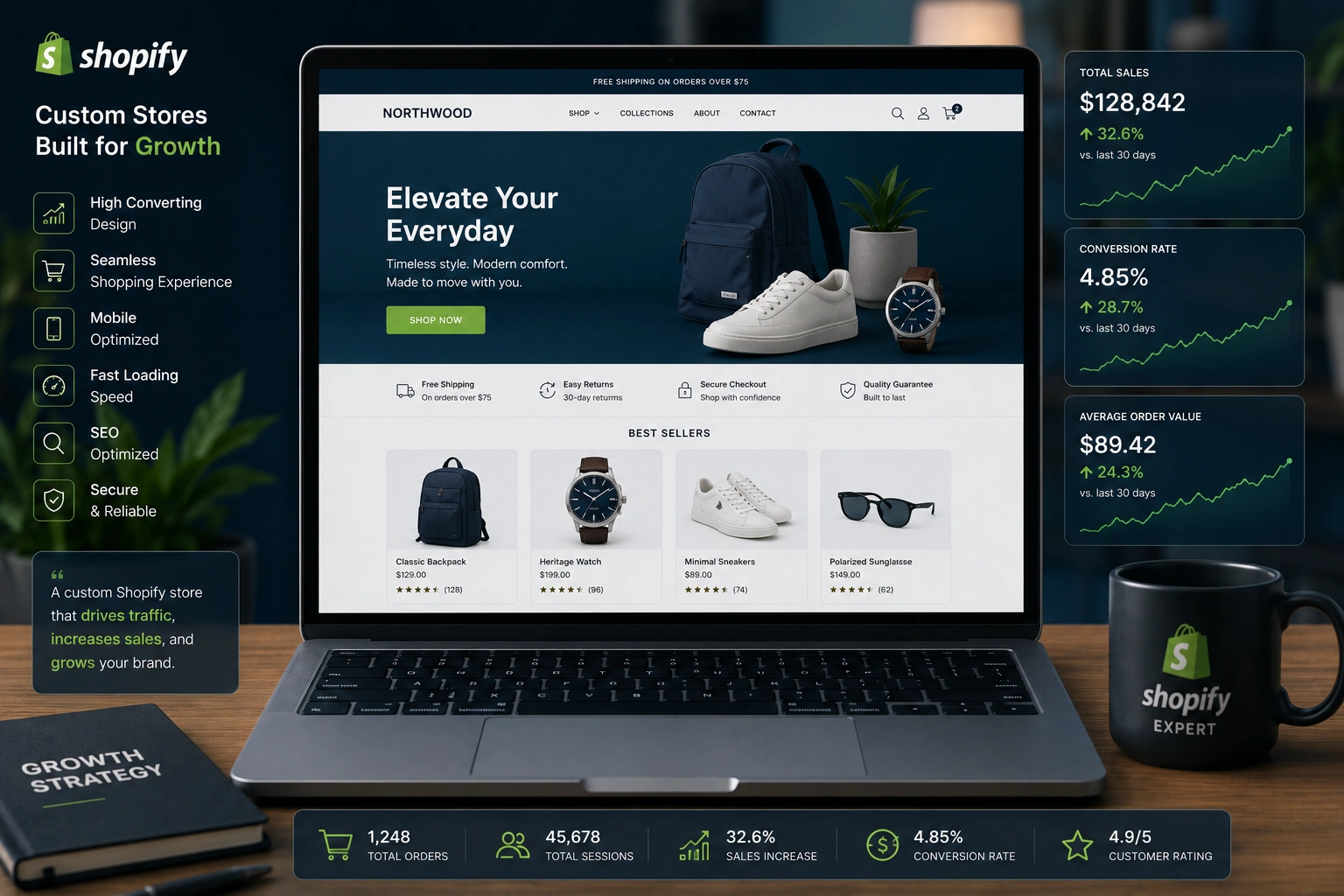
When I started helping store owners scale their businesses, most were stuck on basic Shopify templates. They had decent products but frustrating checkout experiences, slow loading times, and zero room to stand out. That’s where bringing in a Shopify Expert makes all the difference. A custom Shopify store isn’t just prettier — it’s built to convert and grow.
Over the past few years I’ve worked on dozens of Shopify projects, from simple dropshipping stores to more complex multi-product brands. The pattern is clear: businesses that invest in proper custom development see faster growth, higher average order values, and far fewer technical headaches. In this post, I’ll share five practical ways a Shopify Expert can drive real growth for your store.
Why a Custom Shopify Store Beats Template Limitations
Most beginners start with one of Shopify’s free or cheap themes. They look okay at first, but they quickly become restrictive. You can’t easily change the checkout flow, add unique functionality, or optimize every element for your specific audience.
A Shopify Expert builds beyond templates. We code custom sections, create tailored user journeys, and integrate tools that actually fit your business model. This is especially valuable for Shopify dropshipping operations where speed and trust are everything.
I’ve seen conversion rates jump 30-50% after moving from a generic theme to a properly optimized custom build. The difference isn’t just visual — it’s in how the store performs under pressure.
1. Faster Loading Speeds That Reduce Bounce Rates
Speed is one of the biggest ranking and conversion factors today. Generic themes come loaded with unnecessary scripts and large images. A Shopify Expert knows how to optimize everything from Liquid code to image delivery.
We implement lazy loading properly, choose the right apps (or build lightweight custom solutions), and clean up code bloat. One client in the fashion dropshipping space saw their mobile load time drop from 6.8 seconds to under 2 seconds. Their bounce rate fell dramatically and organic traffic quality improved.
Shopify support for performance issues is helpful, but an expert who understands your specific setup delivers faster, more sustainable results.
2. Tailored User Experience That Actually Converts
Standard themes force your customers into the same flow as everyone else. Custom development lets you design experiences around your products and buyer psychology.
For example, I built a custom product recommendation engine for a home goods store that increased add-to-cart rates significantly. We added size guides, trust badges, and a simplified checkout that felt native to their brand — not like a generic Shopify template.
This level of customization builds trust faster, especially important in competitive Shopify dropshipping niches where buyers are wary of new stores.
3. Seamless Integrations and Automation for Scaling
Growth brings complexity. Inventory sync, marketing tools, customer support systems, and analytics all need to work together.
A Shopify Expert sets up robust integrations that don’t break when you scale. Whether it’s connecting your dropshipping suppliers automatically or building custom reporting dashboards, these systems save hours every week and reduce costly errors.
I always recommend starting with core needs rather than stacking dozens of apps. Fewer, well-built connections almost always perform better.
Read more about my approach to building reliable systems here.
4. Better SEO and Long-Term Visibility
Shopify’s built-in tools are decent, but they have limits. Custom development allows proper schema markup, optimized URL structures, faster core web vitals, and better mobile experiences — all signals Google loves.
One store I worked with moved from page 3 to page 1 for several competitive keywords within months of launching their custom build. The combination of technical SEO improvements and a site that users actually wanted to explore made the difference.
For more on modern website platforms, you can explore Shopify’s own resources.
5. Full Ownership and Future-Proof Flexibility
With a custom Shopify store, you’re not locked into theme updates that break your design. You control the roadmap. Need to add wholesale portals, subscription models, or membership areas later? It’s much easier when the foundation was built correctly from day one.
This ownership mindset is what separates stores that plateau from those that keep growing year after year.
Step-by-Step: How to Get a High-Converting Custom Shopify Store
Here’s the practical process I follow with most clients:
- Discovery & Goal Setting — We map your products, target customers, and growth targets.
- Competitor & Market Analysis — Identify what works in your niche and where gaps exist.
- Wireframing & Design — Create custom layouts focused on conversion paths.
- Development & Coding — Build using clean Liquid, JavaScript, and necessary apps.
- Testing & Optimization — Mobile checks, speed tests, and real-user feedback.
- Launch & Ongoing Support — Post-launch monitoring and iterative improvements.
This structured approach prevents the common chaos of rushed builds.
Common Mistakes to Avoid When Building Your Shopify Store
I’ve seen too many store owners waste money on cheap developers who deliver broken code or overpromise on timelines. Here are the big ones:
- Choosing developers based only on price instead of proven Shopify Expert experience.
- Adding too many apps without proper integration testing.
- Ignoring mobile experience during development.
- Skipping proper speed optimization before launch.
- Failing to plan for future scaling needs.
If you’re currently struggling with a slow or underperforming store, consider a professional audit.
Real-World Example: From Stagnant to Scaling
One of my clients ran a Shopify dropshipping store selling eco-friendly gadgets. Their original template-based site had a 1.8% conversion rate and frequent cart abandonment. After a full custom rebuild focused on trust signals, faster checkout, and personalized recommendations, their conversion rate climbed to 4.7% within the first quarter. Monthly revenue more than doubled, and they were able to expand into new product lines without technical limitations.
Shopify Template vs Custom Store: Quick Comparison
| Aspect | Template Store | Custom Shopify Store |
| Loading Speed | Often average | Optimized for performance |
| Conversion Focus | Generic | Tailored to your audience |
| Scalability | Limited | Built for growth |
| SEO Potential | Basic | Advanced technical foundation |
| Long-term Cost | Higher hidden costs | Better ROI over time |
FAQ
What does a Shopify Expert actually do differently?
A true Shopify Expert goes beyond installing themes. We code custom functionality, optimize performance, and align the entire store with your business goals rather than forcing your business to fit the platform.
Is a custom Shopify store worth it for dropshipping?
Yes, especially once you validate your niche. A fast, trustworthy custom store helps Shopify dropshipping businesses stand out and convert skeptical buyers more effectively.
How much does a custom Shopify store cost?
It varies widely depending on complexity. Simple customizations start lower while full builds with advanced features require proper investment. The key is focusing on ROI rather than just upfront price.
Can I get ongoing Shopify support after launch?
Absolutely. Good experts offer Shopify support packages that include maintenance, updates, and new feature development as your business grows.
How long does it take to build a custom Shopify store?
Most solid projects take 4-8 weeks, depending on scope. Rushing usually leads to problems that cost more to fix later.
Do I need technical skills to manage a custom store?
Not really. We build them to be manageable through the Shopify admin, and I provide training and documentation so you stay in control.
Ready to Take Your Store to the Next Level?
A custom Shopify store built by an experienced Shopify Expert is one of the smartest investments you can make in your e-commerce business. It gives you speed, flexibility, better conversions, and a solid foundation for long-term growth.
If you’re tired of fighting against your current setup or ready to launch something that actually scales, I’d love to hear about your project. Feel free to reach out through my site or check my services at digitalwindit.com.
What’s holding your store back right now? Drop a comment below — I read every one.