I’ve spent years building websites for businesses trying to grow online. One truth keeps showing up: your website isn’t just a digital brochure. It’s the foundation of every marketing effort you run. When I work with clients, the biggest shifts happen after we focus on responsive web design and proper technical setup.
If your site frustrates users on mobile or loads slowly, even the best ad campaigns and content will underperform. In this post, I’ll share practical insights from real projects on how a web developer can strengthen your digital marketing.
Why Responsive Web Design Matters More Than Ever for Marketing
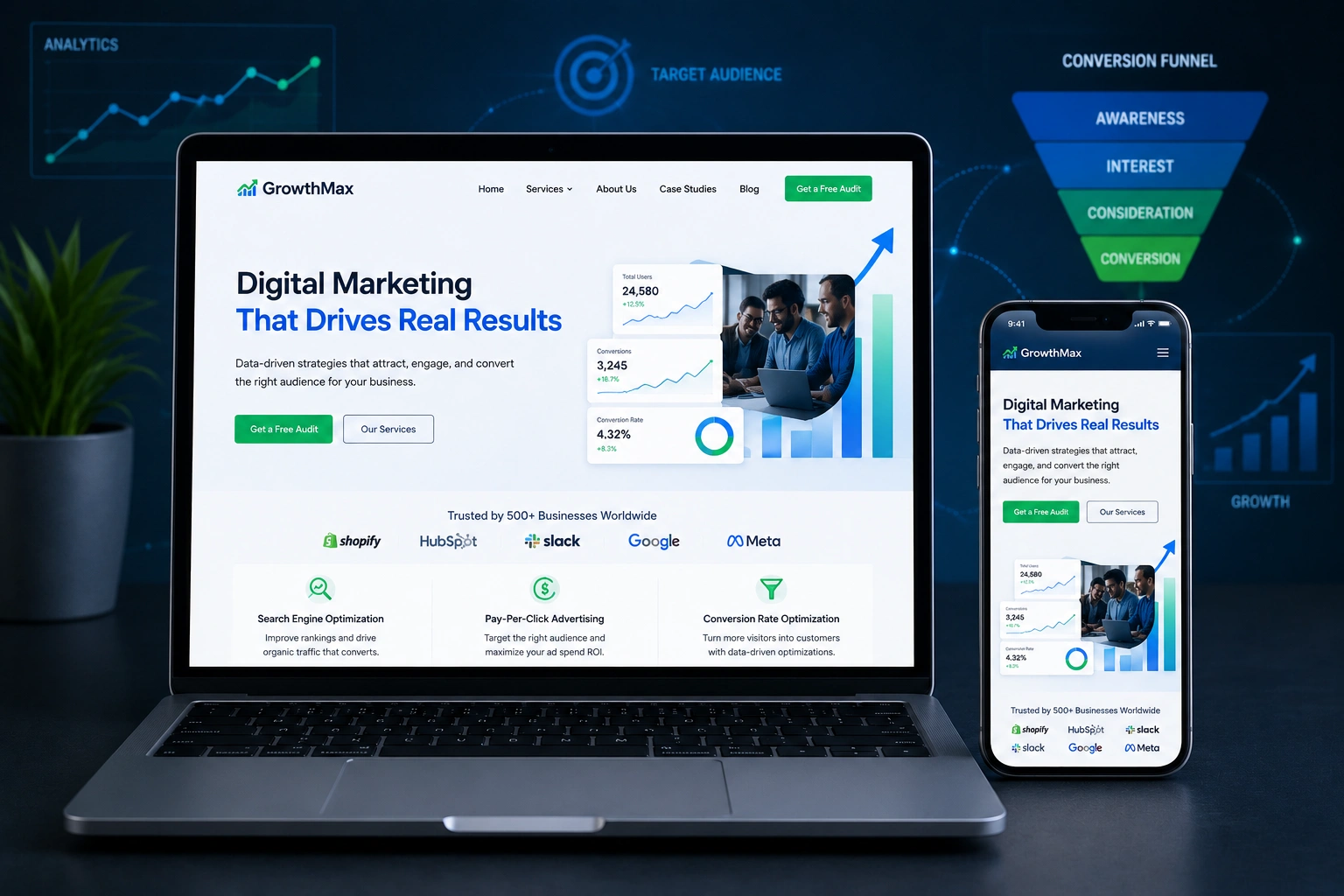
Responsive web design means your site automatically adjusts to any screen size—phone, tablet, desktop—without losing functionality or looks. Google uses mobile-first indexing, so if your site doesn’t perform well on phones, you’re already behind.
From my experience, non-responsive sites see higher bounce rates. Visitors leave quickly when they have to pinch and zoom. That hurts time on site, pages per session, and ultimately your SEO rankings.
A good websites design company builds with flexibility from day one using fluid grids, flexible images, and CSS media queries. This creates seamless experiences that keep people engaged with your marketing messages.
Core Benefits a Web Developer Brings to Digital Marketing
A skilled web developer does more than code pretty pages. They create technical foundations that amplify marketing results.
Better User Experience and Lower Bounce Rates
Fast, intuitive navigation keeps visitors reading your blog posts, exploring products, or filling out lead forms. I’ve seen conversion rates jump 20-40% after optimizing for mobile.
Improved SEO Performance
Search engines reward sites that load quickly and work well across devices. Responsive design uses a single URL set, which consolidates your SEO signals instead of splitting them across desktop and mobile versions.
Faster Loading Times
Developers optimize images, minify code, and use modern techniques like lazy loading. Every second counts—especially when running paid ads where cost-per-click adds up quickly.
Seamless Integration with Marketing Tools
Your developer can connect analytics, email capture forms, chat widgets, and CRM systems smoothly. This turns your site into a true marketing hub.
For platforms like WordPress, Webflow, or Shopify, a developer ensures everything works together without conflicts.
Real Impact: How Website Redesign Services Drive Business Growth
I once worked with a local service business whose old site was built in the early 2010s. It looked fine on desktop but was nearly unusable on phones. Traffic came from Google ads and social media, but conversions were dismal.
After a focused website redesign services project, we implemented fully responsive layouts, improved page speed, and added clear calls-to-action. Within three months:
- Organic traffic increased by over 60%
- Lead form submissions nearly doubled
- Bounce rate dropped significantly
The marketing team could now confidently send people to landing pages knowing the site would deliver. This is the kind of multiplier effect you get when development and marketing align.
Data backs this up: Mobile commerce continues growing rapidly, and responsive sites capture more of that traffic effectively.
Step-by-Step: How a Web Developer Supports Your Marketing Efforts
Here’s a practical process I follow with clients:
- Audit the Current Site — Analyze performance on different devices, loading speeds, and user flow issues using tools like Google PageSpeed Insights and mobile emulators.
- Define Marketing Goals — Meet with the marketing team to understand target audience, key campaigns, lead generation needs, and conversion funnels.
- Plan Responsive Architecture — Design with mobile-first in mind. Choose flexible frameworks and ensure content hierarchy works across screens.
- Build and Optimize Technical Foundations — Implement clean code, fast hosting, proper schema markup, and marketing tool integrations.
- Test Thoroughly — Check across real devices, browsers, and user scenarios. Fix any friction points.
- Launch and Monitor — Go live, track performance with analytics, and make data-driven tweaks.
This structured approach ensures the website actively supports—not hinders—your digital marketing.
Common Mistakes and How to Avoid Them
Many businesses make these errors when working with a websites design company or handling updates themselves:
- Treating design as purely visual without considering marketing funnels
- Ignoring page speed optimization during redesigns
- Using pop-ups or layouts that break on mobile
- Failing to update content and internal linking during redesigns
- Choosing cheap templates that limit future marketing flexibility
The fix is simple: Work with someone who understands both development and marketing objectives. Avoid “set it and forget it” thinking—regular maintenance keeps your site performing as algorithms and user habits evolve.
FAQ: Responsive Web Design and Digital Marketing
What is responsive web design and why does it matter for marketing?
Responsive web design makes your website adapt to any device. It matters because most people browse on phones, and Google prioritizes mobile-friendly sites in search results.
How does website redesign services improve SEO?
A proper redesign fixes technical issues, improves speed, creates better user experiences, and consolidates SEO signals under one set of URLs.
Can a web developer really help with my digital marketing campaigns?
Absolutely. They build the landing pages, tracking, and technical features that make campaigns more effective and measurable.
How much does a responsive website redesign typically cost?
It varies widely based on complexity, but focusing on high-impact changes often delivers strong ROI faster than a complete overhaul.
What platforms work best for marketing-focused websites?
WordPress offers great flexibility for content marketing, while Webflow provides powerful design control without heavy coding.
Conclusion: Make Your Website Work Harder for Your Marketing
Responsive web design isn’t a nice-to-have technical feature—it’s essential infrastructure for successful digital marketing today. When your site loads quickly, looks professional on every device, and guides visitors smoothly toward action, every other marketing effort becomes more effective.
Whether you’re running ads, creating content, or building an email list, a well-built website multiplies your results. If your current site feels outdated or isn’t delivering the leads you need, it might be time for expert help.
Ready to strengthen your online foundation? Visit my personal site or check out the services at Digital Wind IT to see how we approach these projects. Let’s build something that actually grows your business.