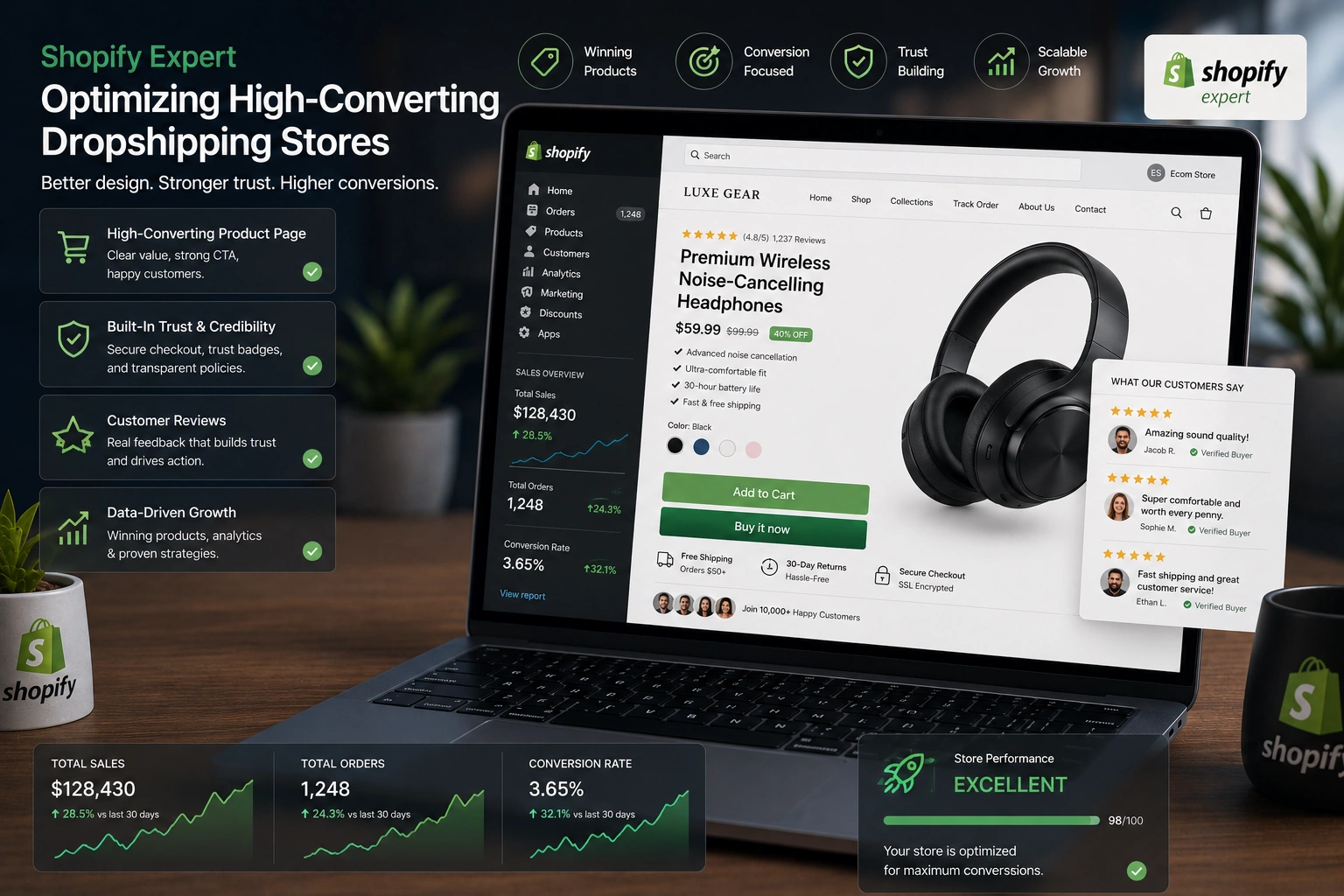
I’ve spent years working as a Shopify Expert, helping beginners and growing businesses launch and scale online stores. Many come to me after wasting months (and money) on stores that look decent but convert poorly. The difference between a pretty store and one that makes consistent sales isn’t luck—it’s strategy, experience, and attention to the details that matter.
In this post, I’ll share what actually works based on real projects. Whether you’re into Shopify dropshipping or selling your own products, a skilled Shopify Expert can set up your store for conversions from day one while providing the Shopify support needed to keep it growing. No fluff—just practical steps that have delivered results for my clients.
What Makes a Shopify Expert Different
A good Shopify Expert does more than install a theme and add products. They think like a customer and build with conversion in mind from the start.
Most new store owners focus on visuals. That’s important, but conversion comes from removing friction, building trust quickly, and guiding visitors toward purchase. I’ve seen stores double their conversion rates simply by fixing checkout flow and adding strategic social proof.
The average Shopify store converts around 1.4–1.8%. Top performers push past 3–4.7% with deliberate optimization. That gap represents real revenue—especially in Shopify dropshipping where margins can be tight.
The Core Benefits of Working with a Shopify Expert
Hiring the right Shopify Expert saves time and money while delivering a store built for sales.
- Faster Time to Market: Instead of trial-and-error, you get a professional setup that works on mobile (where most traffic comes from).
- Higher Conversions: Through proper product page design, trust signals, and optimized checkout.
- Scalable Foundation: Easy to add Shopify dropshipping suppliers, apps, and marketing channels without breaking things.
- Ongoing Support: Technical issues, updates, and performance tweaks handled without stress.
One client came to me with a Shopify dropshipping store stuck at under 1% conversion. After a focused redesign and Shopify support for the first few months, it stabilized above 3.5%. The key? We didn’t chase trends—we fixed fundamentals.
Real Impact on Your Business
A high-converting store changes everything. It means lower customer acquisition costs because each visitor is worth more. It builds momentum for marketing—paid ads become profitable faster, and organic traffic converts better.
In Shopify dropshipping, this is critical. Suppliers and competition are everywhere, so your store needs to stand out with speed, clarity, and trust. Proper Shopify support also prevents costly downtime or lost sales during peak seasons.
I’ve helped clients transition from side hustles to full businesses by focusing on stores that don’t just look good but perform under real traffic.
Step-by-Step: How a Shopify Expert Creates a Converting Store
Here’s the practical process I follow with clients. You can use this as a roadmap whether you hire help or do it yourself.
- Niche and Product Validation Start narrow. Validate demand with tools and competitor research. A Shopify Expert helps pick winning products that solve clear problems.
- Store Setup and Theme Customization Choose a fast, mobile-first theme. Customize for your brand but keep navigation simple. Remove distractions—focus on one primary goal per page.
- Product Pages That Sell High-quality images and videos from multiple angles. Benefit-focused descriptions (not just features). Add size guides, shipping info, and reviews right where they matter—near the Add to Cart button.
- Trust and Conversion Elements Install trust badges, secure payment icons, and genuine customer reviews. Optimize checkout to minimize steps. Enable guest checkout and multiple payment options.
- Speed and Technical Optimization Compress images, limit heavy apps, and use Shopify’s built-in tools for performance. A one-second delay can kill conversions.
- Testing and Launch Test on real devices. Set up analytics. Launch with basic marketing, then monitor and iterate with Shopify support.
This structured approach consistently outperforms DIY stores I’ve audited.
Common Mistakes and Troubleshooting
Even experienced store owners slip up. Here are the ones I see most often—and how to fix them:
- Too Many Apps: Slows your site and complicates things. Stick to essentials and audit regularly.
- Poor Mobile Experience: Most traffic is mobile. If it doesn’t load fast or navigate easily, you’re losing sales.
- Weak Product Pages: Generic descriptions and low-quality images kill trust. Always prioritize benefits and visuals.
- Ignoring Checkout Friction: Forced account creation or complicated shipping options cause abandonment.
- Launching Without Trust Signals: No reviews, policies, or contact info makes visitors bounce.
Troubleshooting Tip: Use Shopify’s analytics and heatmapping tools (or free alternatives) to see where people drop off. Fix the biggest leaks first. For Shopify dropshipping stores, double-check supplier reliability to avoid stock and delivery complaints that hurt reviews.
If your store is already live and struggling, a quick audit from a Shopify Expert can identify quick wins.
FAQ: Shopify Expert and High-Converting Stores
How much does a Shopify Expert cost?
It varies widely. Basic setup might run a few hundred dollars, while full custom builds with ongoing Shopify support cost more. Focus on value— the right expert pays for themselves through higher sales.
Is Shopify good for dropshipping in 2026?
Yes. With reliable suppliers, fast themes, and built-in tools, Shopify dropshipping remains one of the easiest ways to start. Success depends on product choice and store optimization more than the platform.
What conversion rate should I aim for?
Average is 1.4–1.8%, but aim higher with optimization. Stores in the top 20% often exceed 3%. Track your own numbers and improve steadily.
Can I do this without hiring a Shopify Expert?
You can handle basics yourself using Shopify’s resources, but complex customization, CRO, and scaling benefit hugely from expert help—especially if time is limited.
How do I maintain conversions long-term?
Ongoing Shopify support matters. Regularly test changes, update content, monitor speed, and respond to customer feedback. Treat your store as a living business.
What’s the biggest factor in Shopify store success?
Product-market fit combined with a frictionless buying experience. A great Shopify Expert helps with both.
Ready to Build a Store That Converts?
Working with or learning from a Shopify Expert is one of the smartest moves you can make if you’re serious about ecommerce. Whether through Shopify dropshipping, physical products, or digital goods, the principles stay the same: speed, trust, clarity, and continuous improvement.
If you’re ready to stop guessing and start selling, check out my services at ShihabMorshed.com or explore more resources at DigitalWindIT. For the official platform guide, visit Shopify.com.
Drop a comment below if you have a specific challenge with your store—I read them all and often share quick tips. Let’s build something that actually works.