I’ve built and helped implement several learning management systems over the years, both custom and off-the-shelf. The question always comes up: is pouring money into a custom LMS actually worth it, or should you just sign up for Thinkific or Kajabi?
If you’re a coach, course creator, corporate trainer, or business owner scaling online education, this decision matters. A bad choice either wastes thousands upfront or leaves you stuck with limitations that hurt growth later. In this post, I’ll break down the real custom LMS cost, compare it to alternatives, and share when it makes sense.
Learning management systems (LMS) have evolved far beyond simple course uploaders. Today they handle everything from personalized learning paths to compliance tracking and community features. But the price tag varies wildly.
What Does a Custom LMS Actually Cost?
From my experience and recent industry data, building a custom learning content management system isn’t cheap, but it’s not always as expensive as people fear.
Basic custom LMS platforms (core course creation, user management, progress tracking) often start around $25,000–$80,000. Mid-range solutions with good mobile support, analytics, and some integrations run $80,000–$150,000. Fully featured enterprise-grade systems with AI recommendations, advanced gamification, and heavy custom workflows can hit $200,000–$400,000+.
These numbers include design, development, testing, and initial deployment. Don’t forget ongoing costs: hosting, maintenance (typically 15-20% of build cost per year), updates, and server scaling.
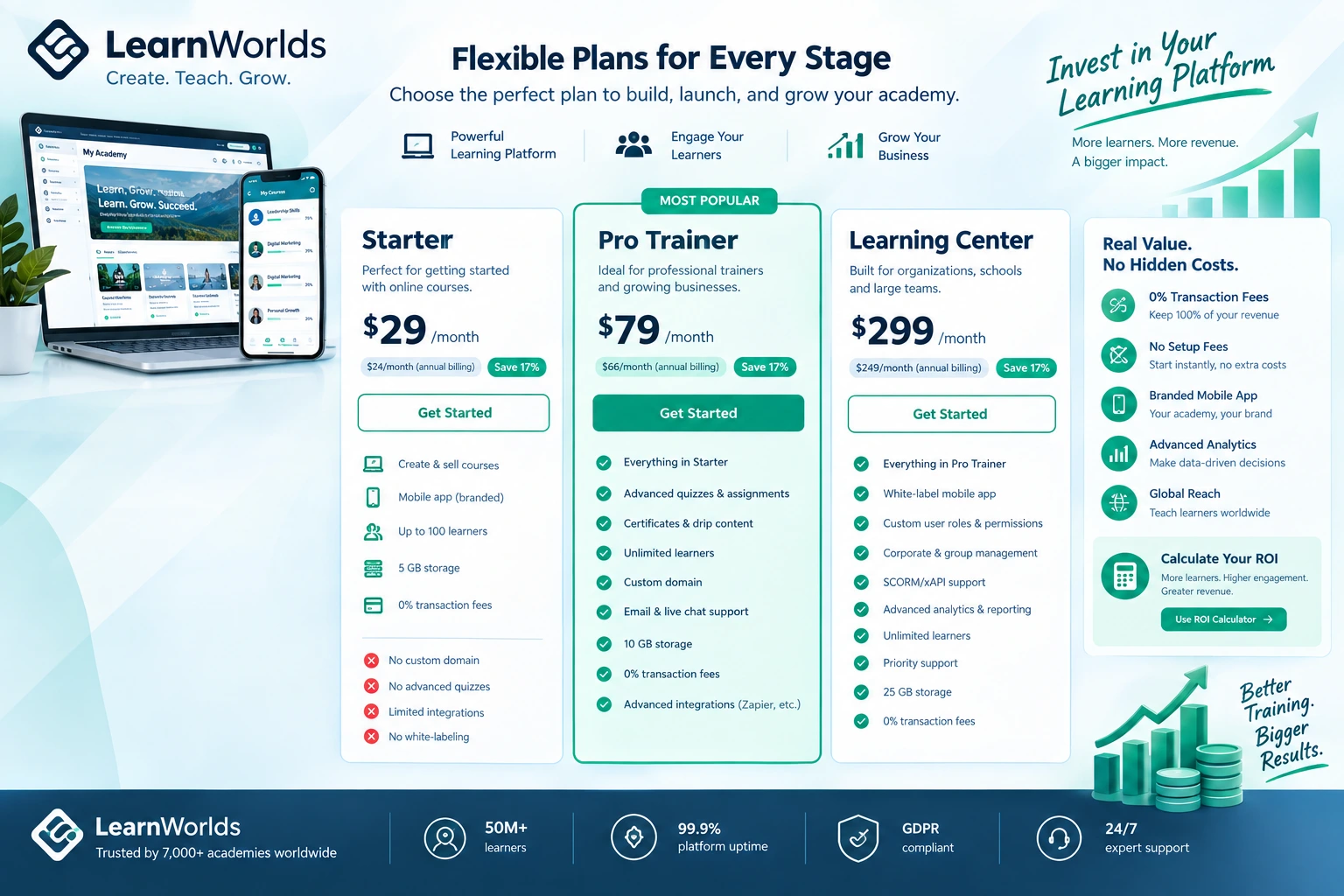
In contrast, popular SaaS platforms charge monthly or per user. Thinkific or Kajabi might run you a few hundred to a couple thousand dollars monthly once you scale, adding up fast over years.
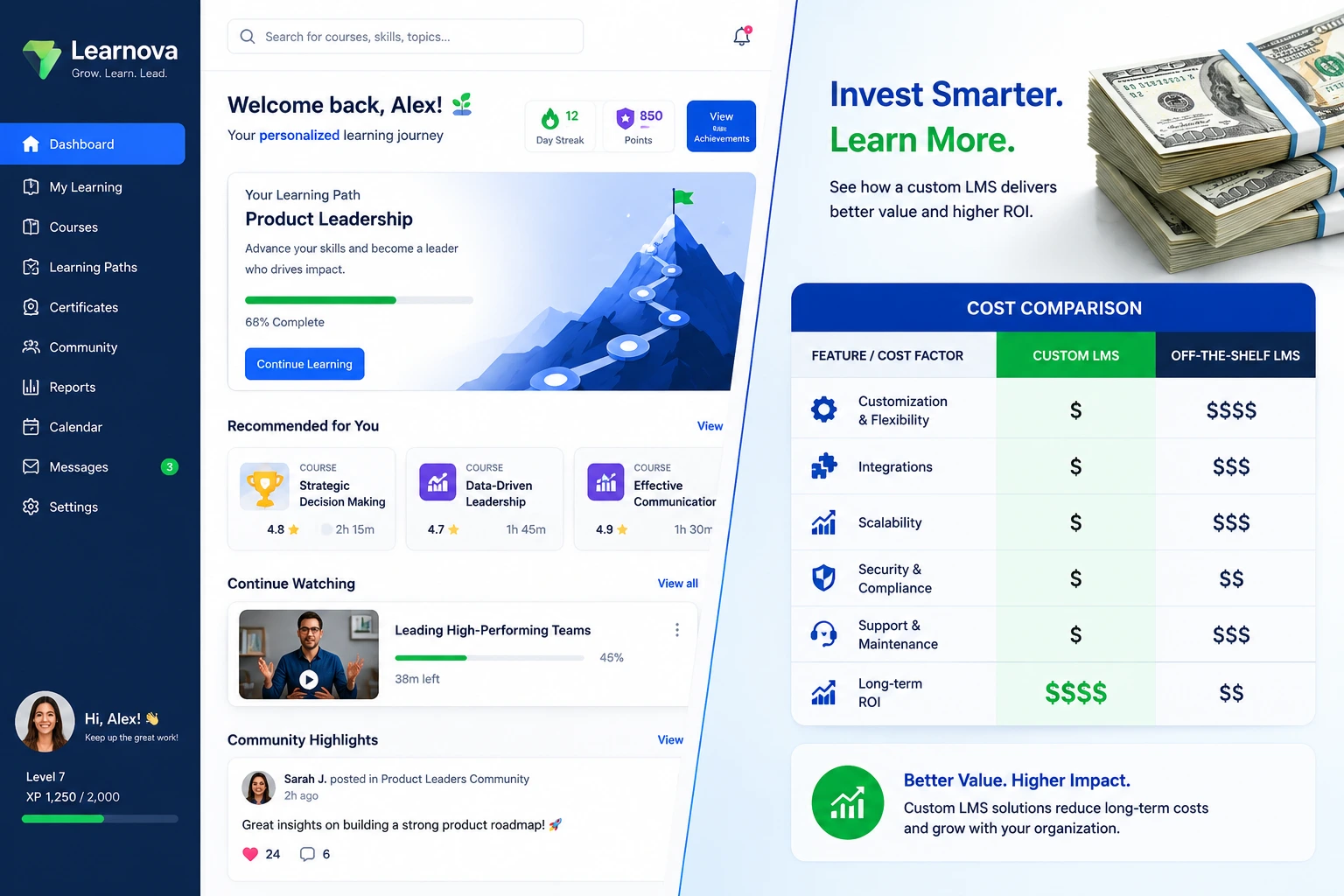
Real comparison insight: For a business with 5,000+ active users, custom development can break even in 3–4 years because you avoid recurring per-user fees and heavy customization add-ons.
Key Benefits of Investing in a Custom LMS
The biggest advantage I’ve seen is control. With a custom learning management systems solution, you own your data, branding, and feature roadmap. No more waiting for a SaaS provider to add the integration you need.
Other practical benefits:
- Perfect branding and user experience — Your platform looks and feels like an extension of your business.
- Tailored features — Build exactly what your audience needs, whether it’s niche compliance tools or advanced certification workflows.
- Scalability without limits — Add users or features without sudden price jumps.
- Data ownership and integrations — Connect deeply with your existing CRM, marketing tools, or payment systems.
- Long-term cost efficiency at scale.
I worked with one client who started on a popular platform but hit walls with custom enrollment logic. Switching to custom saved them frustration and improved completion rates by over 30%.
When a Custom Learning Management System Makes Business Sense
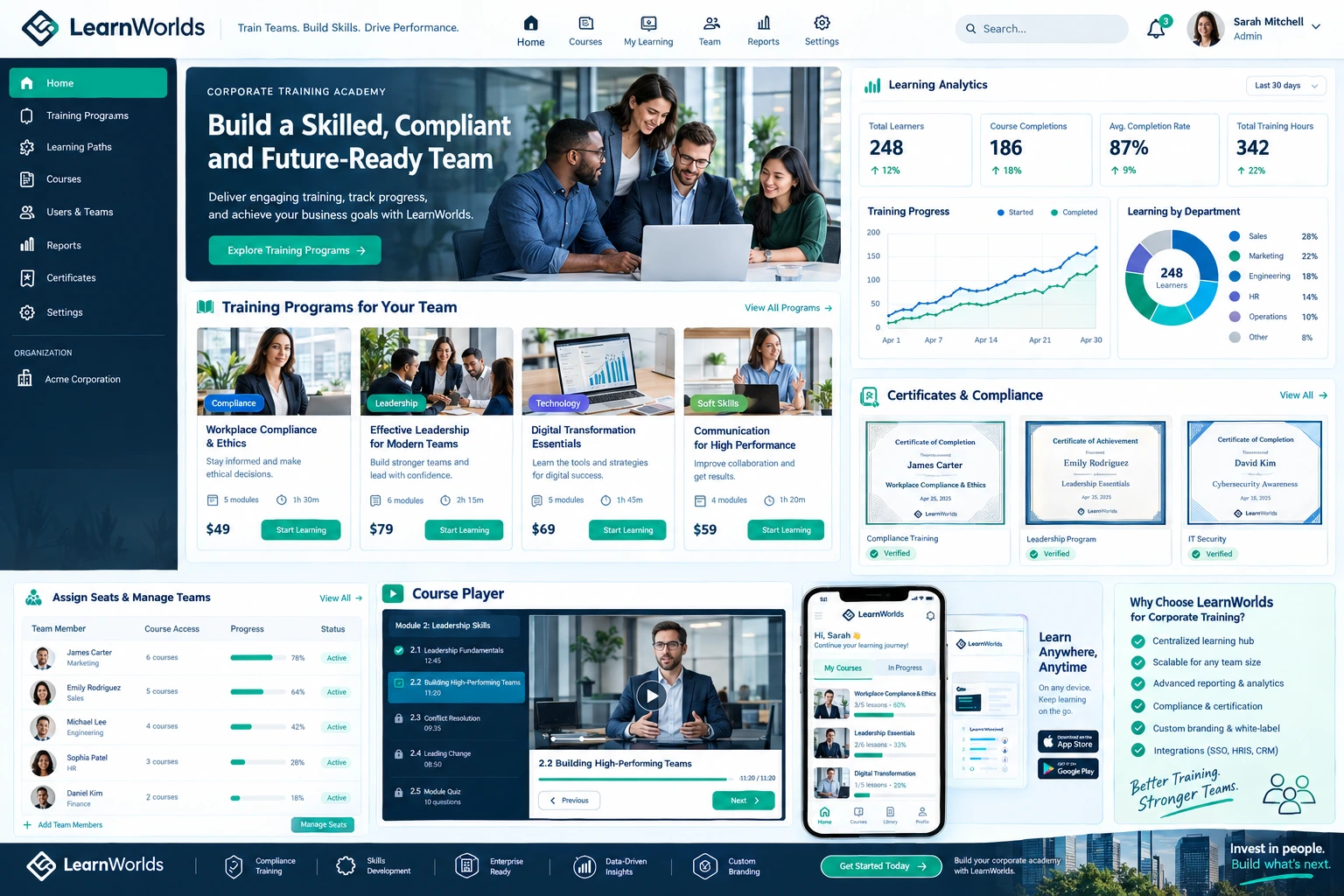
Not everyone needs custom. If you’re just starting with a handful of courses, platforms like LearnWorlds or Thinkific are fantastic and fast to launch.
Custom shines when:
- You have unique training requirements (corporate compliance, specialized certifications).
- You plan to serve thousands of users.
- Branding and seamless user experience are core to your offer.
- You want to monetize in creative ways (memberships, bundles, live events) without platform restrictions.
- Data privacy or security regulations demand specific controls.
For many of my clients running digital products or internal training, the custom LMS became a competitive advantage rather than just an expense.
Step-by-Step Guide to Evaluating and Building a Custom LMS
Here’s the practical process I recommend:
- Define your must-have features — List core needs (course delivery, assessments) versus nice-to-haves (AI recommendations, mobile app).
- Analyze your audience and scale — How many users now? In 12–24 months?
- Calculate total cost of ownership — Include development, maintenance, and opportunity cost of limitations.
- Explore build options — Custom from scratch, heavily customized open-source like WordPress with LMS plugins, or hybrid.
- Choose the right team — Look for developers experienced with learning content management system projects.
- Plan for launch and iteration — Start with an MVP and expand based on real user feedback.
This structured approach prevents expensive mistakes. For WordPress users, starting with solid plugins and then moving toward more custom development can be a smart middle path. Check out resources at digitalwindit.com for practical web development insights.
Common Mistakes and Troubleshooting Custom LMS Projects
The biggest mistake I see is underestimating ongoing costs. People focus on the upfront build but forget maintenance, security updates, and content creation.
Other pitfalls:
- Scope creep — Trying to build every possible feature at once. Start minimal.
- Poor user experience — Fancy features mean nothing if navigation confuses learners.
- Ignoring mobile — Most learning happens on phones now.
- Weak integrations — Your LMS needs to talk to your other tools.
If your project feels stuck, audit requirements against actual user needs. Sometimes a well-configured SaaS plus custom elements works better than full custom.
FAQ: Custom LMS Cost and Decisions
How much does a basic custom LMS really cost?
Expect $25,000–$80,000 for a solid starting point with essential features. Complex projects go much higher.
Is a custom learning management system better than Kajabi or Thinkific?
It depends on scale and needs. SaaS platforms win for speed and simplicity. Custom wins for unique requirements and long-term ownership.
What’s the maintenance cost for a custom LMS?
Typically 15-20% of the initial development cost annually for updates, hosting, and support.
Can I start with WordPress and go custom later?
Yes. Many successful setups begin on WordPress.org with LMS plugins and evolve into more custom solutions.
How long does it take to build a custom LMS?
A basic version might take 3-6 months. Full-featured platforms often require 8-12 months or more.
When does the ROI make sense?
Usually when you have significant user volume, unique needs, or want full control over monetization and data.
Is a Custom LMS Worth It for You?
After seeing both sides, a custom learning management systems solution is worth the investment when your goals go beyond basic course hosting. It gives you freedom, branding power, and scalability that generic platforms can’t match long-term.
The custom LMS cost looks high initially, but for growing businesses and specialized training needs, it often becomes one of the smartest investments you can make.
If you’re evaluating options for your online education platform, I can help. Visit my site at shihabmorshed.com to learn more about building digital products that last, or reach out to discuss your specific needs. What’s your biggest challenge with learning platforms right now? Drop a comment below.