Global teams and diverse workforces are now the norm. Companies need to deliver consistent training across different languages without losing quality or increasing administrative workload.
Generic platforms often struggle with true multilingual support, offering basic translations that feel robotic or break the learning experience. A custom LMS, however, can be designed specifically to handle multiple languages smoothly and effectively.
In my experience helping organizations build training systems for international teams, a well-designed custom learning management system removes language barriers and creates truly inclusive learning experiences.
Why Multilingual Training Matters Today
Employees learn and retain information best in their native language. Poor language support leads to lower completion rates, misunderstandings, and inconsistent performance across regions.
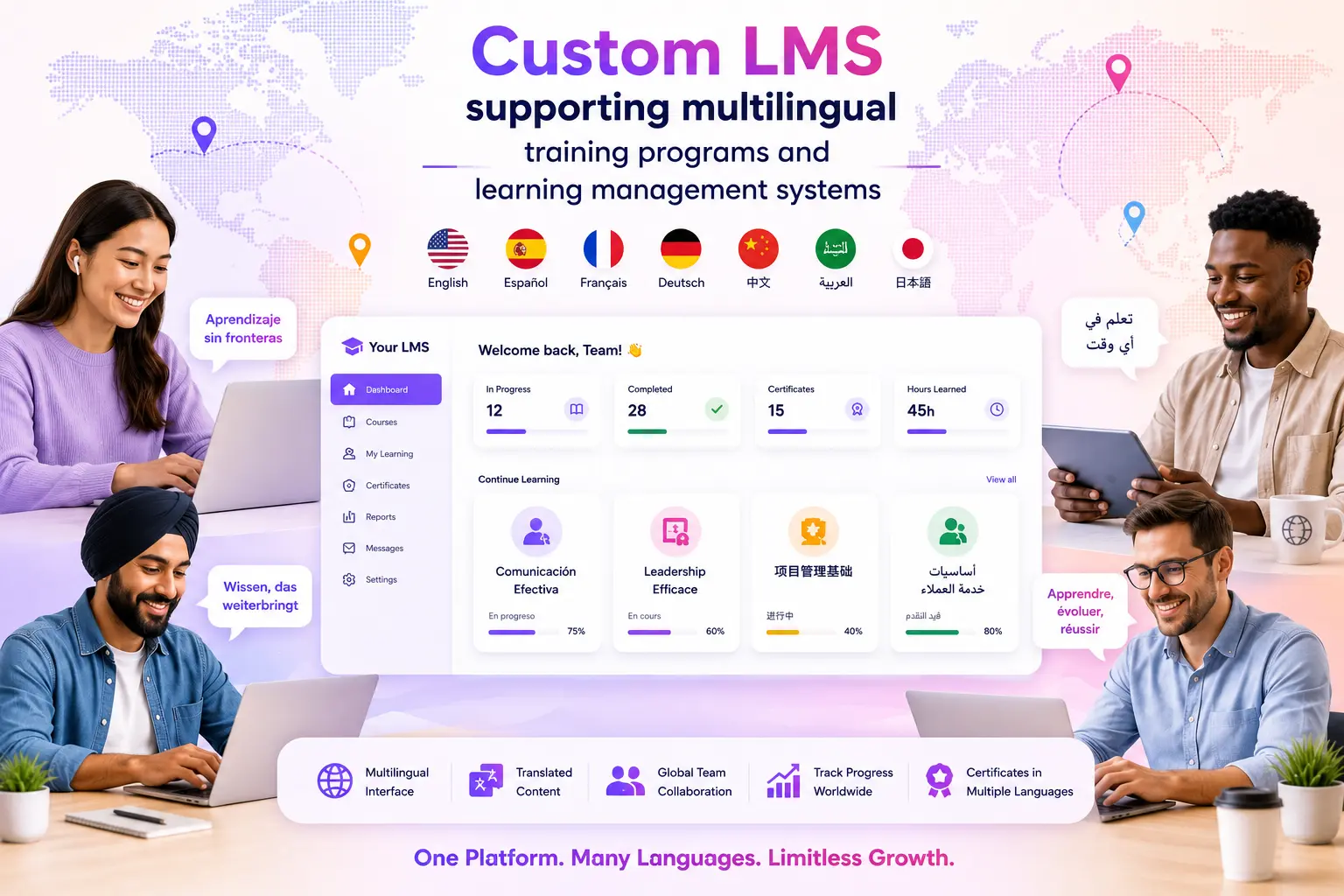
A custom LMS addresses these challenges by supporting seamless language switching, accurate translations, and culturally relevant content.
Key Benefits of a Custom LMS for Multilingual Training
Here’s what a tailored learning management system delivers for global programs:
- Seamless Language Switching — Users can select their preferred language at login or per course with content automatically adapting.
- Accurate & Contextual Translations — Beyond simple machine translation, you can maintain professional, industry-specific terminology.
- Right-to-Left (RTL) Support — Essential for languages like Arabic, Hebrew, or Urdu.
- Localized Content — Deliver region-specific examples, compliance rules, and cultural nuances.
- Unified Reporting — Track progress and completion across all languages in one dashboard.
- Consistent Branding — Maintain your brand identity across every language version.
These features create an equitable learning experience for everyone, regardless of location or native language.
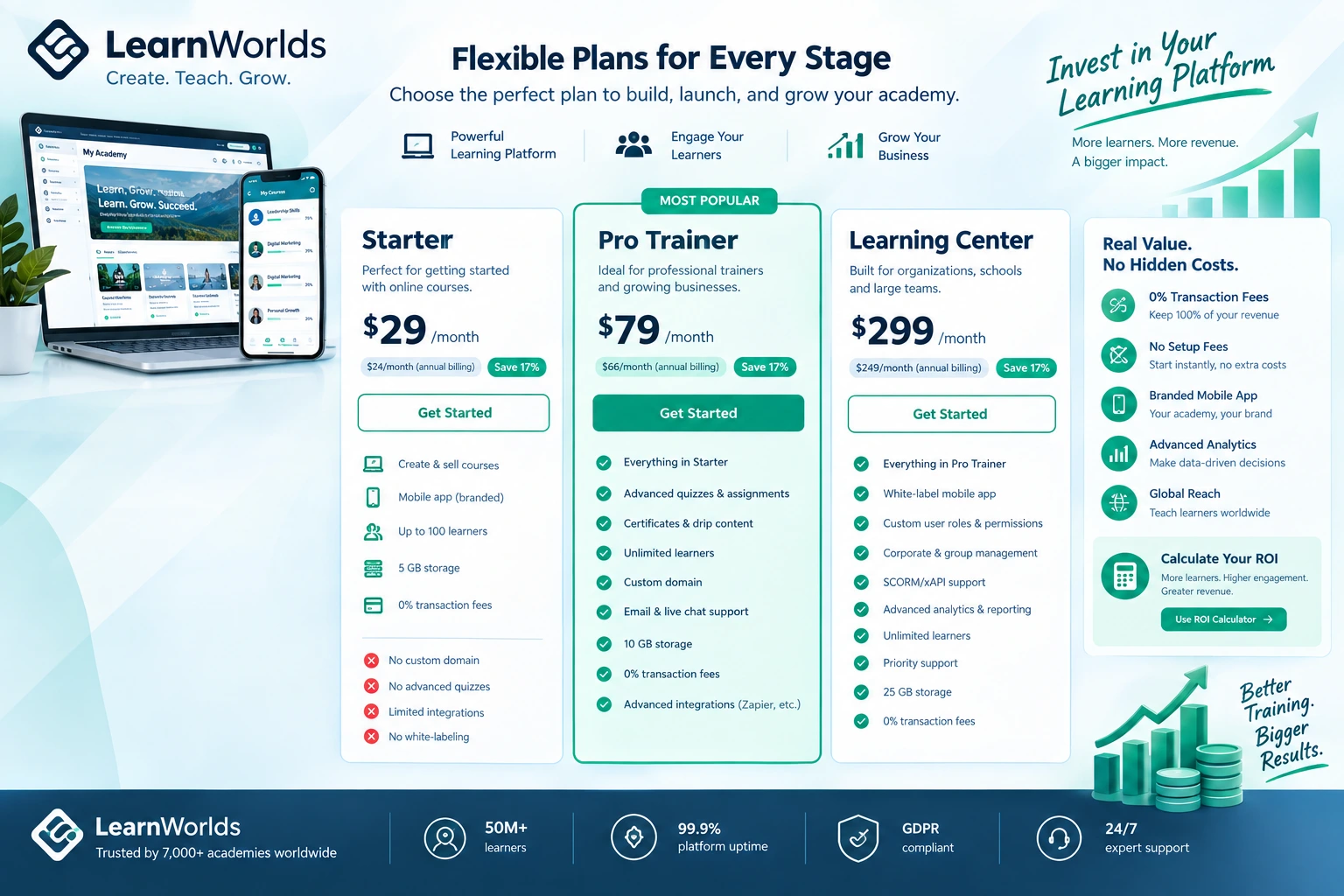
Comparison Insight: Platforms like Thinkific and Kajabi offer some multilingual options, while LearnWorlds provides decent translation tools. However, for complex global training with specific terminology, cultural adaptation, and advanced automation, a custom LMS provides superior control and flexibility.
Real-World Example
A manufacturing company I worked with had operations in 8 countries. Their previous platform only supported basic subtitles, causing confusion around safety procedures. After implementing a custom LMS with full multilingual capabilities, they achieved 94% completion rates across all regions. Employees reported higher confidence because training finally felt relevant and easy to understand in their own language.
Step-by-Step: Building Multilingual Support in a Custom LMS
Here’s a practical approach:
- Identify Target Languages — Prioritize based on employee distribution and business needs.
- Choose Translation Strategy — Combine professional human translation for critical content with smart automation for updates.
- Design Flexible Architecture — Build the system to handle multiple languages from the foundation.
- Implement User Preferences — Allow easy language selection and remember user choices.
- Add Cultural Adaptation — Customize examples, images, and scenarios per region.
- Test Thoroughly — Have native speakers review content and user flow.
- Monitor and Update — Create efficient workflows for keeping all language versions current.
This method ensures high-quality multilingual training without chaos.
Common Challenges and How to Overcome Them
- Inconsistent Translations → Use glossaries and professional reviewers for key terms.
- High Maintenance → Design smart content management that updates all languages efficiently.
- Technical Issues (RTL, fonts) → Work with developers experienced in multilingual systems.
- Cost Concerns → Start with core languages and expand gradually.
Experienced teams know how to handle these issues effectively. Explore robust solutions at Digital Wind IT.
FAQ: Custom LMS and Multilingual Training
Can a custom LMS automatically translate content?
It can support smart automation, but best results come from combining AI with professional review for accuracy.
Is multilingual support expensive?
Initial setup costs more than basic platforms, but it saves money through higher completion rates and consistent global training.
How many languages can a custom LMS handle?
Practically unlimited. Most companies start with 3–8 languages and add more as needed.
Does it support right-to-left languages?
Yes. A properly built custom learning management system fully supports RTL layout and formatting.
Is it suitable for small businesses with international teams?
Absolutely. Even smaller organizations benefit greatly from better employee understanding and engagement.
Build Inclusive Training That Works Globally
A custom LMS removes language barriers and creates fair, effective training for every employee. When people truly understand the material, they perform better, make fewer mistakes, and feel more valued.
If your organization operates across multiple countries or has a diverse workforce, investing in proper multilingual capabilities is no longer optional — it’s essential for success.
Ready to create training programs that work for everyone? Visit Digital Wind IT for custom development expertise or reach out through my site to discuss your specific needs.The best learning management systems don’t just deliver content — they ensure every learner understands it, regardless of language.