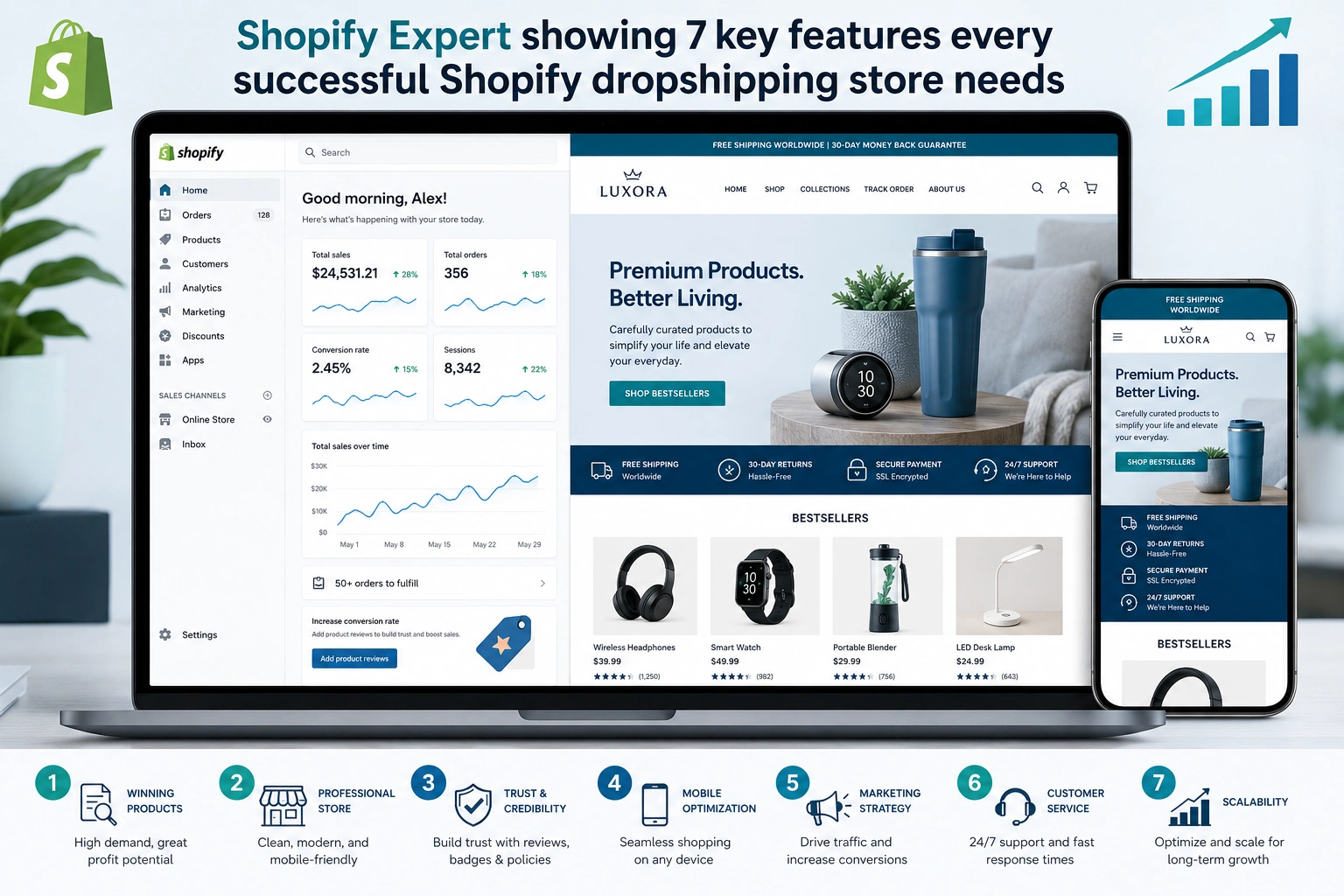
I’ve spent years working as a Shopify Expert, helping beginners and growing dropshipping businesses turn basic stores into reliable revenue machines. Many new store owners focus only on pretty themes and product uploads. They miss the foundational features that actually drive sales and reduce headaches.
In this post, I’ll share the seven non-negotiable features every Shopify store should have. These come from real client projects where we fixed slow-loading sites, abandoned carts, and poor mobile experiences. Whether you’re just starting Shopify dropshipping or scaling an existing store, these will save you time and money.
Why These Features Matter for Your Shopify Success
A beautiful store means nothing if customers bounce after three seconds or can’t complete checkout. The right features improve user experience, build trust, and support long-term growth.
From my experience supporting dozens of Shopify dropshipping stores, stores with these seven features consistently see higher conversion rates and fewer support tickets. They also make your life easier when you need Shopify support later.
Let’s dive in.
1. Mobile-Responsive Design and Fast Loading Speeds
Most shoppers browse on phones. If your store doesn’t load quickly or look good on mobile, you’re losing sales before they even start.
Shopify themes are generally responsive, but many need tweaks. I always test on real devices. Aim for under 3-second load times. Use Shopify’s built-in tools or lightweight apps to compress images and clean up code.
Pro tip from experience: One client’s dropshipping store had a 7-second load time. After optimization, conversions jumped 42%. Simple changes like lazy loading and proper theme selection made the difference.
2. Secure and Streamlined Checkout Process
Nothing kills a sale faster than a complicated checkout. Enable Shopify Payments or trusted gateways. Offer guest checkout, multiple payment options, and clear progress indicators.
Add trust signals like security badges and money-back guarantees right at checkout. In Shopify dropshipping, fast fulfillment promises also reduce anxiety.
I’ve seen abandoned cart rates drop significantly just by enabling one-click options and showing shipping costs early.
3. High-Quality Product Pages with Strong Visuals and Descriptions
Your product pages are your salespeople. Include multiple high-resolution images, zoom functionality, and lifestyle photos. Write descriptions that answer real buyer questions — not just feature lists.
For Shopify dropshipping stores, add size charts, material details, and care instructions. Videos demonstrating the product in use convert even better.
One real-world example: A fashion dropshipping client added 360-degree views and customer photo uploads. Average time on page increased by over a minute, and sales followed.
4. Smart Navigation, Search, and Collection Organization
Customers should find products in seconds. Use clear mega menus, breadcrumb navigation, and a powerful search bar with autocomplete.
Create logical collections and filters (by price, color, size). This is especially important for stores with hundreds of products.
In my Shopify support work, poor navigation is one of the top reasons for high bounce rates. Fixing it often requires nothing more than better category planning.
5. Built-in SEO Tools and Optimization Features
Shopify handles a lot of technical SEO automatically, but you still need to optimize titles, meta descriptions, alt texts, and URLs.
Use Shopify’s blog feature for content marketing. Install a good SEO app if needed, but don’t overdo it. Focus on fast site speed, proper heading structure, and schema markup for rich snippets.
Comparison insight: I’ve migrated stores from other platforms to Shopify. The built-in SEO foundation usually gives them an immediate ranking boost compared to clunky custom builds.
6. Reliable Analytics and Customer Insights
You can’t improve what you don’t measure. Shopify’s native analytics dashboard shows traffic sources, popular products, and conversion funnels.
Connect Google Analytics for deeper insights. Track customer behavior to spot drop-off points.
For Shopify dropshipping, understanding which products have high view-to-cart ratios helps you double down on winners and cut losers quickly.
7. Powerful Apps and Integrations for Growth
The Shopify App Store is a game-changer. Essential apps include email marketing (like Shopify Email), reviews, upsells, and abandoned cart recovery.
For dropshipping, reliable supplier integrations and inventory sync tools are critical. Don’t overload your store — choose quality over quantity.
As a Shopify Expert, I recommend starting with official Shopify apps first. They tend to be more stable and better supported.
Step-by-Step Guide: Implementing These Features on Your Store
Here’s exactly how I help clients set this up:
- Audit your current store — Use Shopify’s built-in speed report and mobile preview tools.
- Choose or customize a lightweight theme — Focus on performance.
- Optimize product pages — Add images, descriptions, and trust elements.
- Set up navigation and collections — Test with real users if possible.
- Configure checkout and payments — Enable all relevant options.
- Install core apps — Reviews, email, analytics.
- Test thoroughly — Place test orders from mobile and desktop.
Follow these and you’ll have a solid foundation most beginners miss.
Common Mistakes and Troubleshooting Tips
Many new Shopify dropshipping owners make these errors:
- Installing too many apps, which slows the store.
- Ignoring mobile testing.
- Using generic, keyword-stuffed product descriptions.
- Skipping regular backups and updates.
Troubleshooting tip: If your store feels slow, check the Theme Inspector in Shopify admin. Remove unused sections and heavy scripts. For checkout issues, verify payment provider settings and test with different devices.
When things go wrong, reliable Shopify support or an expert can save weeks of frustration.
Visit my site for more hands-on help: https://shihabmorshed.com/ or explore services at https://digitalwindit.com/.
FAQ: Shopify Store Features
What is the most important feature for a new Shopify store?
Mobile responsiveness and fast checkout usually have the biggest immediate impact on conversions.
Do I need paid apps for a successful Shopify dropshipping store?
Not necessarily at the start. Shopify’s built-in tools plus a few free or low-cost apps can take you far. Add more as you scale.
How does Shopify compare to other platforms for beginners?
Shopify wins for ease of use and all-in-one features. It handles hosting, security, and payments better than most alternatives for non-technical users.
Can these features help with SEO?
Yes. Fast loading, good navigation, and quality content all support better search rankings.
How often should I review my store’s features?
At least every quarter, or after major traffic spikes. Customer behavior changes, and Shopify releases new tools regularly.
When should I hire a Shopify Expert?
When you’ve hit a plateau, need custom functionality, or want to scale faster than self-learning allows.
Final Thoughts
Building a successful Shopify store isn’t just about launching quickly — it’s about building smart. These seven features form the backbone of stores that actually make money and stay manageable over time.
As a Shopify Expert who’s helped many dropshipping businesses grow, I can tell you that focusing on these fundamentals pays off faster than chasing trends. Take action on at least three of them this week and you’ll already be ahead of most competitors.
Ready for personalized Shopify support or a full store audit? Reach out through https://shihabmorshed.com/ — I’d love to help you build something that lasts.